How to Make an Americano (and Long Black): Recipe and Ratio
An americano is an espresso lengthened with hot water. The coffee-to-water ratio runs from 1:2 to 1:4, most often around 1:3, for a served volume of about 150 to 240 ml. The key distinction: for an americano you pull the espresso, then add water on top, which breaks the crema and gives a soft cup. For a long black (the Australian and New Zealand style), you pour the hot water first, then the espresso over it, which keeps the crema and holds more body. Water does not dilute caffeine: a double americano still sits around 120 to 130 mg, the same as its double espresso.
- Coffee base: single or double espresso, about 30 to 60 ml
- Hot water: 120 to 180 ml at about 85 to 90 degrees Celsius
- Coffee-to-water ratio: 1:2 to 1:4, often around 1:3
- Served volume: 150 to 240 ml for an americano, tighter for a long black (120 to 150 ml)
- Pour order: espresso then water = americano; water then espresso = long black
- Caffeine: same as the base espresso, about 120 to 130 mg for a double
What is an americano?
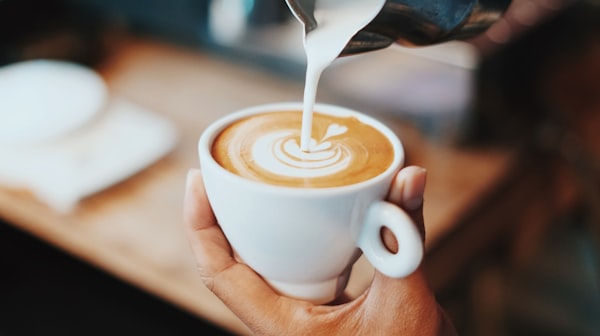
The americano, or caffè americano, is one of the simplest coffees in the book: an espresso, some hot water, nothing else. The aim is to stretch the concentration of an espresso into a longer, easier-drinking black coffee without thinning it into a watery cup. That is the whole craft of it. You want the volume of filter coffee, but the depth and character of a well-pulled espresso behind it.
Its name carries a wartime story. The most commonly cited origin points to American soldiers stationed in Italy during the Second World War. Used to filter coffee, they found the Italian espresso too intense and cut it with hot water to get back to something familiar. Italians named the result caffè americano, American coffee. As with most such tales, take it as a widely repeated anecdote rather than a date carved in stone, but it captures the logic of the drink well: an espresso stretched out for a palate raised on long coffee.
The single most important thing to grasp comes down to one word: order. Depending on whether you add the water before or after the espresso, you end up with two different drinks. Espresso first, water second: that is the americano, and the falling water breaks the crema. Water first, espresso second: that is the long black, made famous in Australia and New Zealand, where the espresso slides over the water and keeps its layer of crema. Same ingredients, reversed move, distinct result.
What do you need to make an americano?
For an americano at home, everything rests on the quality of the base espresso and on hot water at the right temperature. The list is short.
- 18 to 20 g of freshly ground coffee for espresso, fine grind (double basket)
- 120 to 180 ml of hot water at about 85 to 90 degrees Celsius, just below the boil
- Filtered water for the machine, which makes a real difference to so pared-back a drink
- An espresso machine, a kettle or the machine's hot-water tap, and a cup of 150 to 240 ml
- Scales and ideally a thermometer to hit the right water temperature
How do you make an americano step by step?
Success comes down to two settings: a clean, well-extracted espresso, and hot water sitting just below the boil. Water that is too hot scorches the coffee and brings bitterness; lukewarm water gives a flat cup.
- Dial in the grind and dose. Weigh 18 to 20 g of freshly ground coffee for a double basket, with a fine espresso grind. Spread the grounds evenly and tamp level.
- Heat the water. Bring filtered water to about 85 to 90 degrees Celsius. If you use a kettle, let just-boiled water rest for around thirty seconds before pouring: dropping just below the boil keeps you from cooking the coffee.
- Pull the espresso. Pull a double espresso, about 60 ml, in 25 to 30 seconds. An intense, syrupy coffee gives the americano body; for a lighter cup, a single shot of about 30 ml works too.
- Lengthen with hot water. For an americano, pour the espresso into the 150 to 240 ml cup, then add 120 to 180 ml of hot water on top, aiming for a ratio of about 1:3. For a long black, reverse it: put the hot water in the cup first, then pull the espresso straight over it, which keeps the crema. Taste and adjust the water across brews depending on whether you like the cup tighter or longer.
How do americano, long black, lungo and espresso differ in the cup?
All four drinks start from the same espresso, but differ in how the water is added and therefore in the cup. The figures below are common specialty coffee references.
| Drink | Pour order | Coffee-to-water ratio | Volume and profile |
|---|---|---|---|
| Americano | espresso then hot water | about 1:3 (1:2 to 1:4) | 150 to 240 ml, soft and smooth, crema broken |
| Long black | hot water then espresso | about 1:2 | 120 to 150 ml, tighter, crema preserved |
| Lungo | water pushed through the grounds | long extraction, no water added | 60 to 120 ml, more bitter, pulled longer |
| Espresso | no water added | no dilution | 25 to 60 ml, concentrated, thick crema |
In short: the americano and the long black start from the same pairing of espresso and hot water, but the pour order changes everything. The lungo does not dilute after the fact: you push more water through the grounds during extraction, which lengthens the shot but also pulls more bitterness. The espresso, finally, stays the concentrated base every one of these cups derives from.
Frequently asked questions about the americano
What is the difference between an americano and a long black?
It comes down to pour order. For an americano you pull the espresso first, then add hot water on top, which breaks the crema and gives a softer, smoother cup. For a long black (the Australian and New Zealand style), you pour the hot water first, then pull the espresso over it, which keeps the crema intact and holds more body. The long black is also usually tighter, around a 1:2 ratio, in a smaller cup.
What is the ratio of an americano?
An americano uses an espresso-to-water ratio that runs from 1:2 to 1:4, most often around 1:3. In practice a double espresso of about 60 ml is lengthened with 120 to 180 ml of hot water at about 85 to 90 degrees Celsius, for a served volume of around 150 to 240 ml. The more water you add, the longer and milder the cup.
Does an americano have more caffeine than an espresso?
No. The hot water lengthens the volume but adds no caffeine. An americano therefore holds roughly the same caffeine as the espresso it is built on: about 120 to 130 mg for a double espresso, against about 60 to 75 mg for a single. The drink volume changes, not the caffeine dose.
Where does the name americano come from?
The name is tied to American soldiers stationed in Italy during the Second World War. Used to filter coffee, they found the Italian espresso too intense and lengthened it with hot water to get closer to the coffee they knew at home. Italians named this preparation caffè americano, American coffee. It is the most commonly cited origin, best taken as a widely repeated story rather than a fixed fact.
Go further: How to make a cappuccino · How to make a cortado · Specialty coffee FAQ · Coffee glossary · All guides