Whole bean vs capsules vs ground coffee: quality, cost and which to choose
Quick answer: whole bean coffee delivers the highest quality and maximum freshness, because you grind on demand, plus the best cost per kilo, but it needs a grinder. Ground coffee is convenient, but it goes stale fast, within minutes of grinding. Capsules are ultra-convenient and perfectly consistent, but expensive per kilo and more wasteful, even though specialty quality is rising. For demanding everyday coffee, choose whole beans; for sheer simplicity, capsules.
- Whole bean: best cup quality, maximum freshness (grind on demand), lowest cost per kilo, but needs a grinder and a little method
- Ground: no equipment, reasonable cost per kilo, but fast aroma loss once the bag is open
- Capsules: unbeatable convenience and consistency, but high cost per kilo and more waste per cup
- Freshness rules: coffee ground just before brewing almost always beats pre-ground coffee, whatever the format
- The right choice depends on your profile: how much aroma you demand, how much time you have and how much waste bothers you
How do whole beans, ground coffee and capsules stack up?
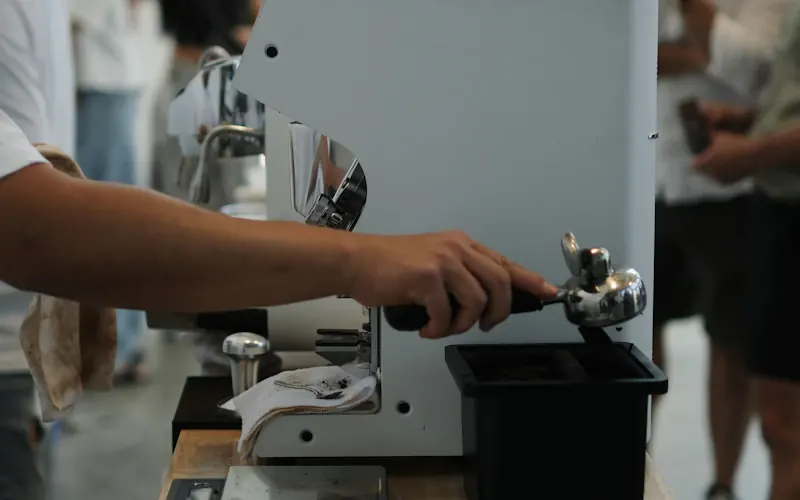
Before the detail, here is the summary of the three formats on the criteria that really matter. None is "best" in the absolute: it all depends on the trade-off you make between the cup, the budget, your time and the waste footprint.
| Criterion | Whole bean | Ground | Capsules |
|---|---|---|---|
| Freshness | Maximum (grind on demand) | Low (loss from the moment of grinding) | Good (sealed packaging, but fixed) |
| Cup quality | Highest, full potential | Decent at first, declining | Consistent, capped by the maker |
| Cost per kilo | Lowest | Low to moderate | High (an order of magnitude above) |
| Convenience | Takes time and method | Simple, ready to use | Maximum, one dose one gesture |
| Waste | Low (one wrapper, compostable grounds) | Low (one wrapper, compostable grounds) | High (one unit per cup) |
| Equipment required | Grinder + brew method | Brew method only | Dedicated capsule machine |
What makes whole bean coffee the quality benchmark?
Whole bean coffee is the format demanding drinkers prefer, and for good reason. As long as the bean stays whole, its aromatics stay locked inside, shielded from oxygen. You only release the aromatic potential when you grind, ideally right before brewing. That grind-on-demand step is what makes all the difference in the cup.
On budget, whole beans deliver the best cost per kilo, especially in 500 g or 1 kg bags. You pay for the coffee, not for individual packaging or a pre-portioned dose. In exchange, the format needs a quality grinder, ideally burr, and a minimum of method: dosing, dialling in the grind, controlling extraction. It is a small upfront investment and a little learning, quickly repaid if you drink coffee every day.
Who is it for? Regular drinkers who want the best possible cup, willing to spend two minutes on preparation and to own a grinder. It is the indispensable format of specialty coffee.
Is ground coffee worth the convenience trade-off?
Ground coffee removes the grinding step and the need for a grinder: you open the bag and you brew. That is its great strength, and its main weakness. Because the moment the bean is ground, oxidation kicks in and the volatile aromatic compounds start to escape, with most of them lost very soon after grinding. A bag of pre-ground coffee bought in a shop has therefore already lost some of its sparkle before it reaches your cup.
The cost per kilo stays reasonable, close to whole beans, sometimes a touch higher. To limit the damage, choose small bags, a resealable pack, storage away from air, light and heat, and quick consumption after opening. The grind setting matters too: a grind sold as "universal" will be optimal for no method in particular.
Who is it for? Those who want simple coffee without owning a grinder, who accept an aromatic compromise in exchange for ease, and who get through their bag fairly fast.
Do coffee capsules deliver on convenience and consistency?
Capsules push convenience to the limit: one dose, one gesture, one cup, with no grinder to clean and no dosing to manage. The grind and quantity are factory-calibrated, and the sealed, controlled-atmosphere packaging protects freshness well until opening. The result is perfect consistency, cup after cup, which no other format guarantees so easily.
The flip side is cost and waste. On a per-kilo basis, capsule coffee sits an order of magnitude above whole beans: several analyses estimate it at roughly three to eight times the per-kilo price of comparable whole bean coffee, with the single-serve dosing and packaging driving the gap. On the environment, each cup produces a unit of packaging to discard, often aluminium or plastic. The supply chain is improving, though: dedicated recycling, compostable capsules, and the quality of specialty capsule coffee keeps rising.
Who is it for? Those who prize simplicity and consistency above all, in a home or office where the goal is fast, hassle-free coffee, accepting a higher cost per kilo.
Whole bean, ground or capsules: which fits your profile?
- The demanding enthusiast: whole bean, no question. Grind-on-demand freshness and the best cost per kilo outweigh the preparation time.
- The busy drinker who still wants good coffee: whole bean with a built-in automatic grinder, or ground bought in small amounts and used up fast.
- The minimalist with no equipment: ground, choosing bags suited to your method and storing them carefully.
- The champion of pure simplicity: capsules, accepting the cost per kilo, ideally with a recycling scheme and a specialty range.
- The waste-conscious: whole bean or ground, which produce only one wrapper per bag and compostable grounds.
- The irregular-consumption household: capsules, which do not go stale while the foil stays sealed, avoiding the waste of a bag left open too long.
Why should you grind coffee right before brewing?
Whatever the format, one principle outranks all the others: coffee loses its aroma very fast after grinding. Oxidation starts the instant the bean is ground, and a meaningful share of the volatile aromatic compounds escapes within the first fifteen minutes. That is why whole bean coffee, ground just before brewing, keeps a structural edge over pre-ground bagged coffee.
In practice, if you care about quality: grind on demand, just before you brew, in a small amount matching your dose. Keep whole beans in an airtight, opaque container, away from heat, and avoid the freezer for daily use (moisture and thermal shock do harm). For ground, seal the bag tightly after each use and finish it quickly. For capsules, the foil does the job for you, but once opened, a capsule loses its aroma as fast as any ground coffee.
Frequently asked questions
Which coffee format gives the best cup quality?
Whole bean coffee gives the best cup quality, because you grind right before brewing and so preserve the volatile aromatics. Once ground, coffee oxidises quickly: a large share of its aromatic potential dissipates within the first fifteen minutes after grinding. Pre-ground coffee in a bag has therefore already lost some of its brightness before it reaches you. Capsules protect freshness better thanks to their sealed packaging, but the dose and grind are fixed, so quality is capped at whatever the manufacturer chose. In specialty coffee, the best cups are almost always brewed from freshly ground whole beans.
Are coffee capsules more expensive than whole beans?
Yes, by a wide margin. On a per-kilo basis, capsule coffee costs an order of magnitude more than whole beans: several analyses put capsules at roughly three to eight times the per-kilo price of comparable whole bean coffee, with the single-serve dosing and packaging driving the gap. Whole beans, by contrast, deliver the lowest cost per kilo, especially in 500 g or 1 kg bags. What the capsule premium really buys you is time and consistency, not raw quality.
How long does ground coffee keep its aroma?
Not long at all. Oxidation begins the moment the bean is ground: the optimal freshness window is in the minutes right after grinding, and a meaningful share of the volatile aromatic compounds escapes within the first fifteen minutes. An opened bag of ground coffee keeps fading in intensity day after day. If you do buy ground, choose small pack sizes, a resealable bag and storage away from air, light and heat, then use it up quickly.
Are coffee capsules bad for the environment?
Capsules generate more waste per cup than whole beans or ground coffee, since each serving produces a unit of packaging to discard, often aluminium or plastic. Many manufacturers now offer dedicated recycling schemes or compostable capsules, and aluminium is recyclable if it is collected properly. Whole beans and ground coffee, by contrast, only produce one wrapper per bag plus fully compostable spent grounds. On the waste criterion alone, whole beans remain the most frugal format.
Further reading: Best coffee grinders 2026 · All buying guides · Specialty coffee FAQ