Coffee Too Bitter? Causes and Fixes
Bitter coffee almost always comes from over-extraction: the water has pulled too many compounds out of the beans. You fix it by grinding coarser, shortening contact time, lowering the water temperature within the 90 to 96 °C window, checking the ratio and cleaning your gear. Change one thing at a time, then taste again.
- Bitterness first signals over-extraction, not a bad bean
- First fix: grind one or two steps coarser
- Ideal temperature: 90.6 to 96.1 °C (SCA recommendation), lower for dark roasts
- Target extraction yield: 18 to 22 percent; beyond that, coffee turns bitter
- Dirty equipment adds a parasitic bitterness no recipe can fix
- Tell apart defect bitterness (dry, astringent) from the structural bitterness of an intentional dark roast
Why does coffee turn bitter?
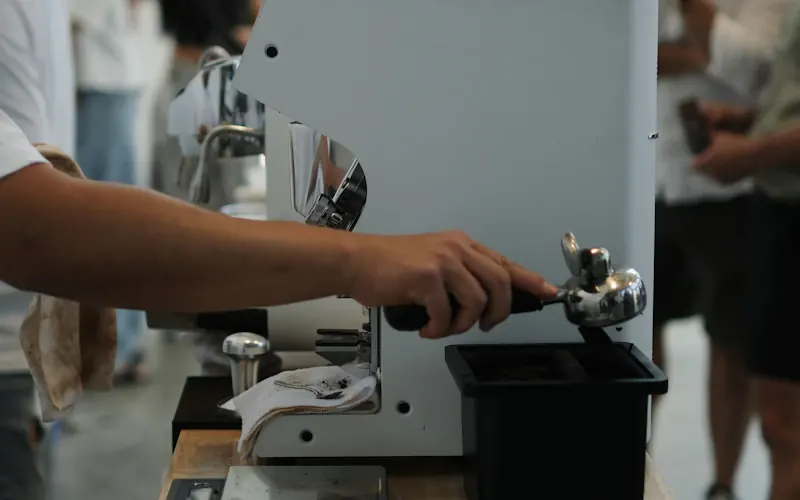
Bitterness is a message. In the vast majority of cases it means the water has pulled too much material out of the beans: over-extraction. As extraction progresses, the sweet and acidic compounds come out first, then the bitter and astringent ones follow. Push too far and you sail past the sweet spot into the bitter end. Professional research places the ideal window between 18 and 22 percent extraction yield; beyond that, the cup turns bitter.
The order of your diagnosis matters. Bitterness rarely comes from a single cause; it usually emerges from the interplay of grind, time and temperature. That is why it pays to avoid spinning several dials at once and instead work methodically, checking the effect of each change on an actual cup. Looking at the variables one at a time also teaches you your own setup, so the next coffee comes together faster. Just as important is an honest look at freshness: even the best dial-in cannot rescue a coffee that has been sitting open for months.
Six causes show up again and again in troubleshooting:
- Grind too fine: smaller particles mean a larger contact surface and faster, harder extraction. This is cause number one.
- Contact time too long: a filter that drains in more than four minutes, or an espresso that runs too slowly, lets the water dissolve the bitter late-extraction compounds.
- Water too hot: above 96 °C the water dissolves more bitter compounds. The SCA window runs from 90.6 to 96.1 °C.
- Dark roast: long roasts develop bitter pyrolysis compounds. Sometimes a style choice, sometimes the source of the problem.
- Overdosing: too much coffee for the water volume unbalances the ratio and concentrates bitterness.
- Dirty equipment: rancid oils in the portafilter, scale in the machine, residue-loaded burrs. This parasitic bitterness depends on no recipe setting.
How do you fix bitter coffee, step by step?
Work in order and change only one variable per attempt. Taste between each step: most cases resolve in the first two.
- Grind coarser. Move the grinder one or two steps coarser. You shrink the contact surface and slow the extraction. This single move solves the most cases of bitterness.
- Shorten the time and adjust the ratio. For filter, aim for 2 min 30 to 3 min 30 on a V60 and start from a ratio of about 1 g coffee to 16 g water. For espresso, stay around 25 to 30 seconds for a 1 to 2 ratio. If the cup is still bitter, lengthen the water side of the ratio slightly.
- Lower the water temperature. Stay between 90.6 and 96.1 °C. If you were above that, drop first to 92 to 93 °C. For dark roasts, go down to 88 to 90 °C.
- Clean the equipment. Descale the machine, purge the group head, brush the grinder burrs and thoroughly rinse the portafilter and brewer. Rancid oils and limescale add a bitterness no setting will remove.
- Reconsider the roast and freshness. If bitterness persists, the bean may be too dark or too old. Choose a lighter roast and coffee roasted within the last four to six weeks, stored away from air and light.
Which bitterness symptom points to which cause and fix?
| Symptom | Likely cause | Fix |
|---|---|---|
| Bitter and astringent, dry mouth | Grind too fine, over-extraction | Grind one or two steps coarser |
| Filter draining very slowly (over 4 min) | Contact time too long | Grind coarser, pour more evenly |
| Burnt or ashy taste | Water too hot or roast too dark | Drop to 90 to 92 °C, choose a lighter coffee |
| Heavy, over-concentrated cup | Overdosing, unbalanced ratio | Reduce the dose or add water (1 to 16) |
| Lingering rancid or metallic aftertaste | Dirty or scaled equipment | Descale, brush burrs, rinse portafilter |
| Espresso running too slowly, dark crema | Grind too fine, tamp too hard | Grind coarser, aim for 25 to 30 s at 1 to 2 |
When is bitterness a defect and when is it a roast style?
Not all bitterness is a flaw. Two things need separating.
Defect bitterness is dry, astringent, it scrapes the palate and lingers unpleasantly, often with an ashy or burnt note. It betrays over-extraction or dirty gear. This is the bitterness the steps above correct.
Structural bitterness is the bitterness of an intentional dark roast, Italian style for instance. It is deliberate, rounder, balanced by body and an underlying sweetness, and it stays pleasant. On these coffees the goal is not to remove bitterness but to control it: a slightly coarser grind, cooler water around 88 to 90 °C, a slightly longer ratio. If you simply dislike the profile, the real remedy is changing the roast, not the setting.
For more on extraction vocabulary, the coffee glossary covers over-extraction, yield and astringency.
Frequently asked questions
Why is my coffee always bitter?
Consistently bitter coffee is almost always over-extracted. The most common causes are a grind that is too fine, contact time that is too long, water hotter than 96 °C, overdosing or dirty equipment. Change one variable at a time, starting with a coarser grind, then taste again.
What water temperature prevents bitter coffee?
The Specialty Coffee Association recommends water between 90.6 and 96.1 °C. Above 96 °C the water dissolves more bitter compounds. For a dark roast, dropping toward 88 to 90 °C helps soften the cup without falling into under-extraction.
Does a grind that is too fine make coffee bitter?
Yes. The finer the grind, the larger the contact surface and the harder the extraction. Beyond a yield of about 22 percent, coffee turns bitter. Grinding one or two steps coarser is the first move to reduce bitterness.
How do I tell defect bitterness from normal bitterness?
Defect bitterness is dry, astringent, lingers unpleasantly and often comes with ashy notes: it signals over-extraction or dirty gear. The structural bitterness of an intentional dark roast is rounder, balanced by body and sweetness. The first is fixed with adjustments, the second is a matter of style.
Go further: All buying guides · Specialty coffee FAQ · Coffee glossary