☕ 3 Key Points
- The Australian Institute of Sport places caffeine in Group A of its supplement framework, and the ISSN sets the working range at 3 to 6 mg/kg of body weight, with 3 to 4 mg/kg giving the best benefit-to-risk balance.
- Taken 45 to 60 minutes before the start, caffeine coincides with its plasma peak and typically buys 2 to 4 per cent on a time-trial effort.
- Daily intake erodes that gain. A few days off restores the response, but the manoeuvre belongs in training, never in the week of a race.
Coffee and Sports Performance: Caffeine, Dosage and Timing
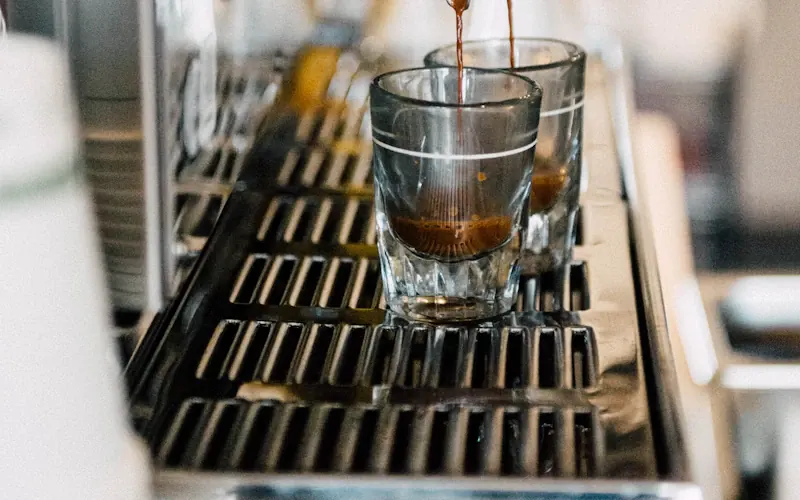
Caffeine is the most extensively researched ergogenic aid in sports science. The 2021 position stand of the ISSN (International Society of Sports Nutrition, United States), published in the Journal of the International Society of Sports Nutrition, concludes that caffeine improves aerobic performance, muscular endurance and, to a lesser extent, strength, provided dose and timing are handled deliberately. The umbrella review by Grgic and colleagues in the British Journal of Sports Medicine (2020), pooling twenty-one meta-analyses, puts the typical gain at 2 to 4 per cent on time-trial efforts, with wider and less transferable margins on time-to-exhaustion tests. The World Anti-Doping Agency (WADA, headquartered in Montreal) removed caffeine from its prohibited substances list in 2004 and has tracked it on the monitoring programme since.
How does caffeine work during exercise?
The sports science community has traced a clear research journey on caffeine from early stimulant studies in the 1970s through the landmark ergogenic classifications of the 1990s and the decisive regulatory pivot by WADA in 2004. The central mechanism is adenosine receptor antagonism. Adenosine is a nucleoside that accumulates progressively during exercise, generating fatigue by binding to ADORA2A receptors (the A2A subtype most relevant to ergogenic effects) and ADORA1 receptors in the central nervous system. Caffeine, whose molecular structure closely resembles adenosine, competes for these binding sites without activating them, thereby blocking the fatigue signal.
Beyond the central nervous system, caffeine exerts peripheral effects: increased mobilisation of free fatty acids through enhanced lipolysis, potentiation of muscular contraction via action on calcium channels in the sarcoplasmic reticulum, and stimulation of catecholamine release (adrenaline and noradrenaline). Together these mechanisms explain why caffeine's benefits extend well beyond simple reductions in perceived exertion.
The hepatic enzyme CYP1A2 (cytochrome P450 1A2) handles the primary metabolic clearance of caffeine. The rs762551 polymorphism of the CYP1A2 gene separates two principal phenotypes: AA homozygotes, the fast metabolisers, clear caffeine more rapidly than C-allele carriers (AC and CC genotypes), the slow metabolisers, whose plasma half-life runs longer. The scale stretches from roughly 3 hours in a fast metaboliser to 7 hours or more in a slow one.
What that genotype does and does not predict deserves a clear line. That it changes clearance rate is pharmacokinetics and is not in dispute. That it predicts the size of the performance gain is a separate claim, and a weaker one: the trial by Grgic and colleagues published in the Journal of the International Society of Sports Nutrition (2020) found no consistent moderating effect on resistance exercise, jumping or sprinting, and subsequent systematic reviews report contradictory findings. Genotype informs the kinetics; it does not replace individual testing in training.
The AIS (Australian Institute of Sport, Australia) classification of caffeine in Group A represents the institutional culmination of decades of research. Group A is reserved for supplements with strong evidence of benefit and low risk when used as directed. The 2004 WADA decision to delist caffeine from prohibited substances removed the regulatory ambiguity that had complicated athlete planning for years. Today, the question for competitive athletes is not whether caffeine works, but how to optimise its use for a specific discipline, body weight, and genetic profile.
How much caffeine per kilogram of body weight?
The ISSN sets the working range at 3 to 6 mg of caffeine per kilogram of body weight and notes that very high doses, in the region of 9 mg/kg, add nothing beyond a higher incidence of side effects. The band offering the best benefit-to-risk ratio sits between 3 and 4 mg/kg. The table below converts these ranges into milligrams and specialty coffee equivalents.
| Body weight (kg) | Minimum dose (3 mg/kg) | Optimal dose (4 mg/kg) | Maximum dose (6 mg/kg) | Espresso equivalent (60 mg/shot) |
|---|---|---|---|---|
| 60 kg | 180 mg | 240 mg | 360 mg | 3 to 4 shots |
| 70 kg | 210 mg | 280 mg | 420 mg | 3.5 to 4.5 shots |
| 80 kg | 240 mg | 320 mg | 480 mg | 4 to 5.5 shots |
| 90 kg | 270 mg | 360 mg | 540 mg | 4.5 to 6 shots |
Methodological note: a single specialty espresso of 25 to 30 ml typically contains 60 to 80 mg of caffeine, with USDA FoodData Central recording 63 mg for a 30 ml shot; a 300 ml filter brew lands nearer 120 to 160 mg, the same database giving 95 mg for 240 ml. These figures move with origin, grind dose, roast level and extraction method. Decaffeinated coffee is not caffeine-free either: a few milligrams per cup remain, far too little to matter ergogenically at ordinary serving sizes.
When should you take caffeine before training or racing?
Timing carries as much weight as the dose. Standard pharmacokinetic data places the plasma Tmax at 30 to 60 minutes after oral ingestion. Taking caffeine 45 to 60 minutes before the start lines the plasma plateau up with the effort itself, and the ISSN observes that 60 minutes pre-exercise is by far the most frequently used protocol in the published trials. The useful window then runs for several hours, which covers most endurance events and standard training sessions.
The plasma half-life of 3 to 7 hours has important practical consequences for recovery. Caffeine consumed in the late afternoon (for example at 17:00) will remain at significant plasma concentrations well into the evening, potentially disrupting sleep quality. For athletes whose nocturnal recovery determines training adaptation, this trade-off between acute performance gain and recovery quality merits careful consideration. Evening training sessions may justify alternative timing strategies or temporary tolerance management.
Which sports benefit most from caffeine?
The umbrella review by Grgic and colleagues (British Journal of Sports Medicine, 2020) and the ISSN position stand set out a fairly consistent hierarchy of benefit across exercise types. Aerobic endurance sports (cycling, long-distance running, triathlon, open-water swimming) carry the strongest evidence: on a time trial, the typical improvement falls between 2 and 4 per cent. Time-to-exhaustion tests report far larger margins, occasionally into double digits, but that laboratory format mechanically inflates the measure and does not transfer to a real race. The cycling data is particularly robust, time-trial performance serving as a reproducible outcome across dozens of controlled studies.
Team sports such as football, rugby, and basketball present positive but more variable data. The intermittent nature of these efforts and the tactical and technical components dilute the contribution of pure physiological fitness, making performance effects harder to isolate. Sprint performance, reaction time, and repeated sprint ability each show modest improvements in well-controlled studies.
For strength and power disciplines (weightlifting, sprinting, resistance training), the evidence is thinner. Recent meta-analyses point to a real but small effect on maximal strength and a somewhat clearer one on muscular endurance, meaning repetitions to failure, with substantial heterogeneity between studies. Individual variability weighs more heavily here than in endurance sport, which makes personal measurement a precondition before turning caffeine into a competition routine.
Does tolerance cancel out the performance gain?
It erodes it rather than erasing it. A trial published in PLOS ONE in 2019 by Lara and colleagues gave 3 mg/kg daily for twenty consecutive days: the roughly 4 % gain measured on day one shrank steadily through the protocol and stopped being statistically significant on the incremental test after about fifteen days. The mechanism proposed is adenosine receptor upregulation in response to chronic blockade, the nervous system compensating by multiplying available binding sites. Two or three daily coffees do not wipe out the effect overnight, but they do move the starting point.
The washout manoeuvre involves cutting or sharply reducing caffeine ahead of a target event. The protocols actually tested in habitual consumers cover short windows, in the order of two to four days, and recover a response comparable to the pre-withdrawal baseline; no work demonstrates that a longer abstinence adds anything. The question is not settled, since several groups observe that habitual consumers retain a measurable gain with no interruption at all. The first 48 hours off caffeine frequently bring headache and flat training sessions, which argues for testing the strategy out of season rather than in race week.
How do you hit a caffeine dose with specialty coffee?
Specialty coffee makes precision dosing easier because species, origin and roast profile are documented. Arabica varietals used in specialty production typically contain 1.2 to 1.5 per cent caffeine by dry weight, against roughly 2.2 to 2.7 per cent in robusta. An athlete following a protocol therefore benefits from sourcing specialty arabica, whose caffeine content per gram is more predictable, and from weighing the grind rather than eyeballing it. A single espresso pulled on 8 to 10 g of coffee delivers 60 to 80 mg; a double pulled on 18 g lands nearer 120 to 150 mg, a figure regularly underestimated by athletes who count cups instead of grams.
Extraction method has little effect on total caffeine yield relative to the dose of coffee used: caffeine is highly soluble and extracted efficiently across all methods including espresso, filter, and AeroPress. The primary variable is concentration per unit volume. A 40 ml espresso is far more concentrated than a 300 ml filter brew, but the filter may deliver more total caffeine if brewed with a larger coffee dose. For athletes with sensitive stomachs before exercise, a longer, more dilute filter brew offers the same total caffeine at a lower concentration, often reducing the risk of gastrointestinal distress.
What are the risks of taking too much caffeine?
Past 6 mg/kg the adverse events climb without any return: tremors, tachycardia, anxiety, gastrointestinal distress, degraded sleep. They are dose-dependent and more pronounced in C-allele carriers of CYP1A2, who clear the molecule more slowly. EFSA (European Food Safety Authority) puts the no-concern reference points for healthy adults at 400 mg per day and 200 mg in a single dose: an ergogenic 4 mg/kg in an 80 kg athlete already reaches 320 mg, leaving little headroom for the rest of the day's coffee. No protocol guarantees a gain, and chasing one does not justify going past the ISSN range.
That leaves dehydration, badly overstated outside the scientific literature. The crossover trial by Killer, Blannin and Jeukendrup published in PLOS ONE in 2014 compared, in fifty habitual male coffee drinkers, four cups supplying 4 mg/kg of caffeine per day against an equivalent volume of water: no difference in total body water, 24-hour urine volume, osmolality or haematological markers. Caffeine's diuretic effect is real but mild, blunted by tolerance in regular drinkers, and offset by the fluid volume of the coffee itself. A pre-exercise coffee is therefore no reason to alter a hydration plan. People with cardiac conditions or hypertension, those who are pregnant, and anyone on medication that alters hepatic metabolism should take medical advice before supplementing.
Frequently Asked Questions
What caffeine dose is effective for sports performance?
The 2021 position stand of the ISSN (International Society of Sports Nutrition, United States) sets the range at 3 to 6 mg per kilogram of body weight, with the best benefit-to-risk balance between 3 and 4 mg/kg. A 70 kg athlete therefore lands on 210 to 280 mg, roughly 3 to 4 single espressos at 60 to 70 mg each. The ISSN also notes that very high doses, around 9 mg/kg, bring no further gain while sharply raising the incidence of tremors, tachycardia and gastrointestinal distress.
How long before exercise should coffee be consumed?
Allow 45 to 60 minutes between the cup and the start line. Caffeine reaches peak plasma concentration (Tmax) within 30 to 60 minutes of ingestion, and the ISSN reports that 60 minutes pre-exercise is by far the most commonly used protocol in the published literature. The useful window then extends for several hours. Plasma half-life runs from 3 to 7 hours depending on CYP1A2 phenotype, which turns the question into a sleep problem whenever the session falls late in the day.
Is caffeine banned by WADA in competitive sport?
No. The World Anti-Doping Agency (WADA, headquartered in Montreal) removed caffeine from its prohibited substances list in 2004. It has been listed on WADA's monitoring programme ever since, a mechanism designed to track usage patterns without exposing athletes to sanction, and that status is unchanged in the 2026 List and Monitoring Program. The Australian Institute of Sport (AIS, Australia) places caffeine in Group A of its supplement framework, the highest evidence tier.