☕ 3 Key Facts
- Burundi coffee is grown almost entirely by smallholder farmers at altitudes between 1 700 and 2 200 m, with Red Bourbon as the dominant variety across the country's highland regions.
- The Long Miles Coffee Project (Burundi), launched in 2012, developed a hill-by-hill traceability system covering more than 5,500 farmers in Kayanza and Muramvya, raising the bar for transparency in East African supply chains.
- Washing stations Bumba, Munyinya, Gaharo and Nkonge, all in the Kayanza area, now offer washed, natural and experimental processing, producing profiles that range from clean red-fruit to complex tropical fermentations.
Burundi Coffee Guide: Red Bourbon, Long Miles and Hill Traceability
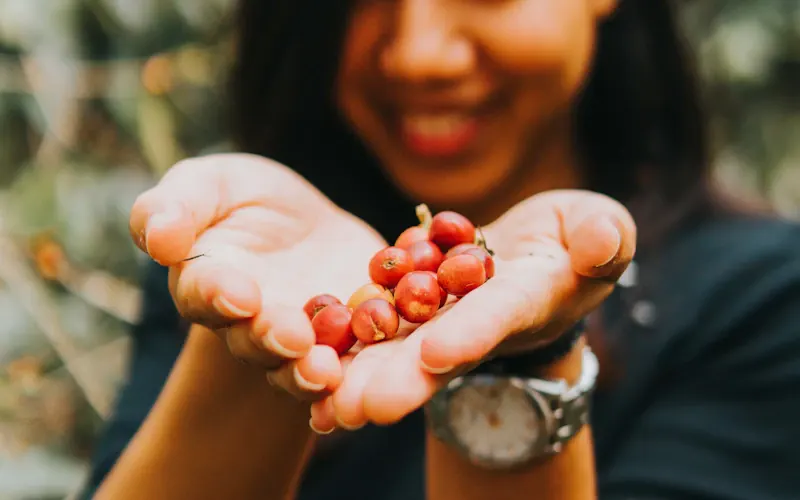
Burundi (Burundi) ranks among the most intriguing and least documented specialty coffee origins in East Africa. Grown almost entirely by smallholders cultivating plots smaller than one hectare, at altitudes between 1 700 and 2 200 m above sea level, Burundi Red Bourbon delivers a malic acidity and a red-fruit aromatic profile that sets it apart from both Kenya and Ethiopia. With annual production around 30 000 tonnes, Burundi is one of Africa's smaller producers by volume, yet that constraint has concentrated attention on quality in a way that rewards the specialty sector disproportionately to the country's market share.
What geographic and climatic conditions shape Burundi coffee?
Burundi occupies a landlocked position in the African Great Lakes region, flanked by the Democratic Republic of Congo to the west, Tanzania to the south and east, and Rwanda to the north. The country's topography is defined by the Albertine Rift escarpment and the central highlands, which create the altitude conditions essential for specialty-grade production. The two primary specialty coffee regions are Kayanza (Burundi), near the Rwandan border in the north, and Muramvya (Burundi), situated in the central highlands at comparable elevation.
The agricultural calendar benefits from Burundi's bimodal rainfall pattern: a short rains season from October to December and a long rains season from March to May. While some areas theoretically support two flowering cycles per year, the commercial harvest concentrates on a single main crop, with cherries typically reaching full ripeness between March and July. The combination of low temperatures at night, high daytime sun intensity, and mineral-rich volcanic soils produces cherries with slow sugar accumulation, a biochemical condition that translates directly into aromatic density and the distinctively bright acidity Burundi is known for.
How did the Long Miles Coffee Project reshape traceability in Burundi?
No single actor has done more to shape the international perception of Burundian coffee than the Long Miles Coffee Project (Burundi). Founded in 2012 by Ben and Kristy Carlson, an American couple who relocated permanently to Burundi, the project was built around a fundamental insight: that the existing system of pooling cherries from across broad regions was destroying origin information that buyers and consumers were actively willing to pay for. The Carlsons built a network of washing stations designed to receive, process and track cherries from named individual hills, a system they branded Hillside Coffee.
The four washing stations at the core of the network are Bumba, Munyinya, Gaharo and Nkonge, all situated in the Kayanza province (Burundi). Each station serves the farming communities on the surrounding hills, which extend across altitudes from 1 700 to over 2 000 m. By the time the project had reached maturity, it connected more than 5 500 smallholder farmers to markets previously inaccessible to them individually. The Hillside Coffee traceability model has since been studied and partially replicated by other actors in Burundi's specialty sector, and Long Miles lots appear regularly among the highest-scoring submissions at the Cup of Excellence Burundi competition.
Which coffee varieties are grown in Burundi?
The Red Bourbon (Bourbon Rouge) variety dominates Burundian production by a wide margin. This cultivar descended from the Bourbon lineage introduced to East Africa during the early twentieth century from the island of Réunion, where it had been cultivated since the 1700s. At high altitudes in Burundi, Red Bourbon expresses a set of characteristics that distinguish it clearly from the SL-28 and SL-34 varieties that define Kenyan specialty coffee: the acidity is malic rather than phosphoric, giving a rounder, apple-like brightness rather than the intense citric sharpness of classic Kenya. The cup is typically clean, delicate and floral, with red fruit notes that become more vivid when the processing is well controlled.
A secondary variety present in some areas is Mibirizi, a locally selected cultivar bred for resistance to coffee leaf rust (Hemileia vastatrix) and adaptation to the highest elevation zones. Mibirizi cups with somewhat more body and slightly lower perceived acidity than Red Bourbon. It remains a minority presence in competition lots and high-end single-origins, but contributes to production volumes in regions where leaf rust pressure makes Bourbon cultivation more difficult.
How do processing methods shape the flavour of Burundi coffee?
Washed processing has been the standard in Burundi since the country built its first modern washing stations in the 1960s under Belgian colonial administration. In the washed method, cherries are depulped mechanically, then the mucilage-coated parchment ferments in water tanks for 12 to 48 hours before being thoroughly washed and transferred to raised drying beds. The result is the clean, transparent flavour profile for which Burundi washed is celebrated: cherry, raspberry, hibiscus, with a bright finish that retains the distinctive malic acidity of the Red Bourbon variety.
Over the past decade, natural and experimental processing have entered the Burundian toolkit, largely driven by the demand from specialty roasters for differentiated lots. In the natural process, whole cherries dry on raised beds for 25 to 40 days, with the fruit pulp imparting its sugars and organic compounds directly into the bean. The resulting cup is fuller, with notes of dried plum, tropical fruit and milk chocolate. Honey processing (partial mucilage retention) occupies an intermediate position, delivering stone-fruit notes alongside a sweetness that the washed process does not produce. Anaerobic fermentation, in which sealed tanks are used before drying, generates the most complex and polarising profiles: intensely fruited, sometimes spiced, always distinctive.
How do Burundi coffee profiles compare across processing methods?
| Processing | Dominant Notes | Acidity | Body | Complexity |
|---|---|---|---|---|
| Washed | Cherry, raspberry, hibiscus, citrus | Bright, malic | Light to medium | High (floral, clean) |
| Natural | Dried plum, tropical fruit, cocoa | Soft, tartric | Full, velvety | High (jammy) |
| Honey | Apricot, peach, caramel, floral | Moderate | Medium | Intermediate |
| Anaerobic | Tropical, fermented, spiced | Variable | Full | Very high (distinctive) |
Where does Burundi coffee sit in the specialty market?
Burundi signed the International Coffee Agreement, which governs the framework for global green coffee trade. A growing share of the country's exports carry Fairtrade certification, Rainforest Alliance (RFA) certification, or both, reflecting increased scrutiny from European institutional buyers on social and environmental conditions of production. These certifications co-exist with non-certified specialty micro-lots that enter the market through direct trade relationships between washing stations and independent roasters.
In cupping contexts, high-scoring Burundi washed lots from Kayanza are frequently positioned alongside Kenya AA for their precision and brightness, and alongside washed Yirgacheffe for their floral complexity. This dual reference point makes Burundi an attractive option for roasters building single-origin programmes who need an East African coffee that is neither a Kenya substitute nor an Ethiopia variant. Its price-to-quality ratio on international green markets has historically been competitive, though exceptional Cup of Excellence lots command premiums comparable to the most sought-after Kenyan and Ethiopian lots.
How should you brew Burundi coffee?
Washed Burundi Red Bourbon performs exceptionally well in low-pressure filter methods: V60, Chemex, Kalita Wave, and Aeropress are all well-suited to the origin. Recommended brewing temperature is 92 to 94 °C, with a coffee-to-water ratio of 1:15 to 1:17 depending on roast level. Light to medium roasts preserve the malic acidity and floral notes; darker roasts round the profile but reduce the origin's defining aromatic character. A medium-fine grind and a total brew time of 3 to 4 minutes brings out the best of a high-altitude washed lot.
Natural-processed Burundis work well both as filter and as espresso. In espresso, a slightly longer extraction time (28 to 30 seconds) and a temperature of 93 °C tend to bring out the stone-fruit sweetness without over-extracting the fermentation notes. Cold brew immersion for 12 hours at room temperature is particularly effective with natural Burundi, producing a concentrate of considerable complexity and low perceived bitterness.
Frequently Asked Questions
What makes Burundi coffee different from other East African origins?
Burundi coffee is distinguished from other East African origins by its combination of extreme altitude (1 700 to 2 200 m), exclusive Red Bourbon genetics, and a hill-by-hill traceability system pioneered by projects like Long Miles Coffee Project (Burundi). Where Kenyan coffees are defined by SL-28 and SL-34 varietals with intense phosphoric acidity, Burundi Red Bourbon delivers a softer malic acidity with a more pronounced floral and red-fruit character. The country's small production volume also means that top lots are genuinely rare.
What is the Long Miles Coffee Project and why does it matter?
The Long Miles Coffee Project (Burundi) was founded in 2012 by Ben and Kristy Carlson, an American couple based permanently in Burundi. The project works with over 5 500 smallholder farmers across the hills of Kayanza and Muramvya, operating washing stations including Bumba, Munyinya, Gaharo and Nkonge. Its Hillside Coffee traceability system assigns each lot to a specific named hill, giving roasters and consumers an unprecedented level of origin transparency.
What flavours should one expect in a high-quality Burundi coffee?
A well-processed washed Burundi from Kayanza typically presents notes of cherry, raspberry and hibiscus, with a bright malic acidity reminiscent of apple juice or redcurrant. The finish is clean and lingering. Natural-processed Burundi coffees shift toward dried plum, cocoa and tropical fruit, with a fuller, more syrupy body.
Browse the specialty coffee glossary for technical terms used in this guide.