☕ Key takeaways
- The siphon (vacuum pot) uses pressure differences between two chambers to draw hot water up into the coffee, create brew turbulence, then pull the brewed liquid down through the filter as the lower chamber cools.
- The resulting cup profile is distinctive: the clarity and brightness of pour-over, combined with a slightly rounder texture from the turbulence and pressure in the upper chamber.
- The cotton cloth filter supplied in the box is preferred over paper for siphon brewing: it allows a little more oil through, adding body without fines, and produces the most expressive aromatic signature of this method.
Siphon Coffee Guide: Spectacle, Precision, Clean Aromatic Profile
3 key takeaways
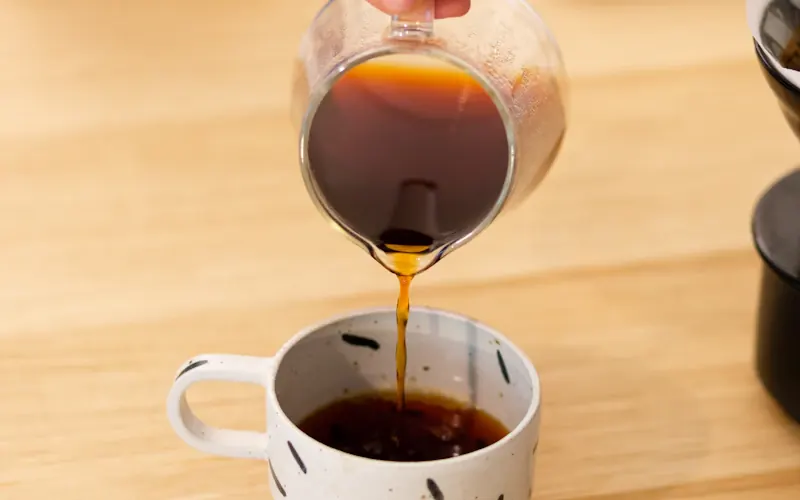
- The siphon, also known as the vacuum pot or vac pot, is the most visually spectacular brewing method in all of specialty coffee. Patented in Berlin in 1830, made a success from Lyon in 1841, it never left the Japanese coffee bar.
- Water climbs because steam raises the pressure inside the lower flask, and it falls back because that steam condenses the moment the heat is removed.
- The siphon excels with coffees that have complex, delicate aromatic profiles: Ethiopian washed with tea and bergamot notes, Yemeni coffees with spiced and fruity character, Jamaica Blue Mountain.
The siphon, also known as the vacuum pot or vac pot, is the most visually spectacular brewing method in all of specialty coffee. The first patent belongs to a Berliner named Loeff, in 1830, but the device only found its public in 1841, when Marie Fanny Amelne Massot, trading as Madame Vassieux, registered in Lyon the twin-glass-globe design we still recognise today. The siphon then enjoyed a major revival in the specialty coffee world of the 2010s, particularly in Japan where it never really fell out of favour. Hario, the Japanese glassmaker founded in 1921, made a coffee siphon its very first coffee product back in 1948 and still sells the Technica range (TCA-2 at 240 ml, TCA-3 at 360 ml, TCA-5 at 600 ml), which you will find in the finest cafés from Tokyo to Brussels. Beyond the theatre, water rising into the upper chamber, coffee steeping, then the brew returning to the lower flask, the siphon produces a cup of extraordinary clarity and aromatic precision that few other methods can match.
Why does water climb into the top bowl and then fall back?
Water climbs because steam raises the pressure inside the lower flask and drives the hot water up the central tube, and it falls back because that steam condenses the moment the heat is removed. That is the whole mechanism. During the rise, a small amount of water stays behind with the steam to hold the pressure, and the water arriving in the top bowl has never boiled: it settles at roughly 90 to 93 °C rather than 100 °C, since only a few hundredths of a bar of overpressure are needed to beat gravity and the column of air above.
On the way down, condensation leaves a partial vacuum under the filter. Nothing is really being sucked: atmospheric pressure is pushing the brewed liquid down through the filter (cloth, paper or stainless steel), which holds the grounds in the upper chamber. That force is gentler than gravity alone and steadier than mechanical pressure, and it produces a cup with light to medium body, exceptional clarity and remarkable aromatic precision.
One detail often goes unnoticed. The bubbles rising through the central tube keep the coffee bed moving for the whole steep, so saturation is immediate and even without any bloom. That constant agitation is why the method repeats so well from one brew to the next.
How much coffee and water does a two-cup siphon brew need?
Use 25 g of coffee to 360 g of water, a ratio close to 1:14, which fills a 360 ml flask exactly and pours two generous cups. On a 240 ml flask drop to 17 g for 240 g of water, on a 600 ml flask go up to 42 g for 600 g. The rest of the settings fit in this table.
| Parameter | Recommended value | Cup impact |
|---|---|---|
| Coffee dose | 25 g (360 ml flask) | Body, concentration |
| Water | 360 g | Ratio, final volume |
| Grind size | Medium (table salt) | Filtration speed, clarity |
| Brew temperature | 90 to 93 °C | Extraction, aromatic profile |
| Steep time | 60 to 90 seconds | Development, body, bitterness |
| Filter type | Cloth, paper or stainless | Body, turbidity, ease of use |
Should you fit your siphon with a cloth, paper or metal filter?
Keep the cloth if you accept its upkeep, switch to paper if you do not, and reserve stainless steel for a heavier cup. The cotton cloth, supplied in the Technica box with its hooked holder, remains the reference of the Japanese siphon: light body, clean aromatics, almost no sediment. In exchange it demands discipline, a generous rinse after every brew and storage submerged in water in the fridge to keep mould away. Treated that way it survives several dozen brews, up to a hundred.
Paper exists as a dedicated Hario reference, with the F-103MN holder sold separately and CF-103E discs by the box of a hundred. Single use, no upkeep, no risk of a forgotten-laundry note in the cup: the result is a notch cleaner than cloth while the profile stays very close. It is the sensible way to start.
The stainless filter, also sold as a Technica-compatible part, lets oils and fines through. It clouds the cup and thickens the texture noticeably. Uncommon on siphons, it appeals to drinkers who find the method too crystalline.
How does a siphon brew run, from assembly to serving?
Seven moves are enough, and timing matters more than force. Here is the full sequence, timer in hand.
- Prepare the filter: Rinse the filter (cloth or paper) with hot water. For cloth, ensure the metal hook is centred at the bottom of the upper chamber. For paper, follow the specific model instructions.
- Heat water in the lower flask: Pour 360 g of already-hot water (80-90 °C to reduce warm-up time) into the lower flask. Place on the heat source (alcohol lamp, butane burner, or induction plate with diffuser).
- Install the upper chamber: When water begins to gently bubble in the flask, insert the upper chamber at an angle, then straighten to create an airtight seal. Reduce heat slightly.
- Allow water to rise, then add coffee: Water will rise into the upper chamber (a small amount should remain in the lower flask). Add the ground coffee and stir gently but thoroughly with a bamboo paddle or flat spoon to ensure complete saturation. Start the timer.
- Steep 60 to 90 seconds: Maintain a gentle boil in the lower flask (visible as small bubbles rising through the tube). Stir once more at 30 seconds to homogenise. Temperature in the upper chamber stabilises around 90 to 93 °C.
- Remove the heat source: At 60-90 seconds, remove the burner or switch off the induction plate. Coffee will begin descending into the lower flask within 20-30 seconds.
- Observe and serve: The vacuum filtration creates a characteristic gentle bubbling sound. The grounds remain in the upper chamber as a slightly convex cake, a slightly domed puck is a good sign of even extraction. Serve immediately in pre-warmed cups.
How do you match each siphon fault to the right fix?
| Symptom | Likely cause | Fix |
|---|---|---|
| Water won't rise into upper chamber | Seal not tight, insufficient heat | Re-check seal installation, increase heat slightly |
| Coffee won't descend after removing heat | Non-airtight seal, vacuum lost | Clean seal and flask neck, check glass integrity |
| Flat or sunken grounds puck | Uneven extraction, poor initial stir | Stir more carefully when adding coffee |
| Very cloudy cup, heavy sediment | Worn or mispositioned cloth filter | Replace cloth filter, use paper filter in the meantime |
| Pronounced bitterness | Steep too long or temperature too high | Reduce to 60 s, lower heat under flask |
| Sour, underdeveloped cup | Steep too short | Extend to 90 s, verify brew temp (min 90 °C) |
| Cloth or filter taste | Filter insufficiently rinsed | Rinse generously before use, replace if taste persists |
Find on Amazon
Affiliate links: as an Amazon Associate, expertcafe.be earns from qualifying purchases, at no extra cost to you. Learn more.
How do you clean and store a siphon without cracking the glass?
Wash both bowls in hot water with a mild detergent the moment the brew ends, and never set a cold flask over a strong flame, because thermal shock is the leading cause of breakage on heatproof glass. Rinse the cloth filter generously, then keep it submerged in water in the fridge rather than dry in a drawer. Check the silicone seal at the neck every time you assemble the pot: a tired seal leaks the vacuum and stalls the draw-down at the most visible moment of the ritual. Hario sells the two bowls, the seal, the lid and the filters separately, which makes the pot repairable part by part rather than disposable.
What goes wrong most often on a siphon?
Four habits account for nearly every failed brew, and none of them is about the hardware.
- Too much heat during steeping: Vigorous boiling in the lower flask pushes the upper chamber towards 96 °C and hardens the cup. Heat should be gentle, just enough to maintain a slight turbulence.
- Skipping the initial stir: Adding coffee without stirring leaves some grounds dry at the surface, unparticipating in extraction. A brief but thorough stir at the moment of adding coffee is essential.
- Waiting too long before serving: Coffee in the lower flask continues heating against the warm glass. Serve within 2 minutes of the descent.
- Grind too fine: Fine grounds clog the cloth filter and slow or block filtration. Grind should be medium calibre, similar to standard drip coffee.
Which coffees are worth brewing in a siphon?
The siphon excels with coffees that have complex, delicate aromatic profiles: Ethiopian washed with tea and bergamot notes, Yemeni coffees with spiced and fruity character, Jamaica Blue Mountain. The cup clarity produced by the siphon acts as a magnifying glass on aromas, a mediocre coffee will be as clearly unmasked as an exceptional coffee will be fully revealed. It's the ideal method for comparative tastings and premium single-origins that you want to explore with maximum sensory precision.
The siphon isn't an everyday method, it's a method for great coffees and moments when the brewing itself becomes part of the ritual. When the water rises into the upper chamber, the whole room holds its breath.