☕ Key takeaways
- Office coffee most often fails through poor structure: unclear budget, undersized equipment and supermarket coffee bought without attention to freshness.
- For a team of 5-15, the best quality-to-cost solution is a batch-brew drip machine with a shared grinder and a roaster subscription.
- Collective project setup must define: budget per person, order frequency, purchase responsibility, and group consensus on quality level, without this, the project collapses within weeks.
Office Coffee Guide: Buying for Groups, Shared Machine, Real Quality
What are the three things that decide whether office coffee works?
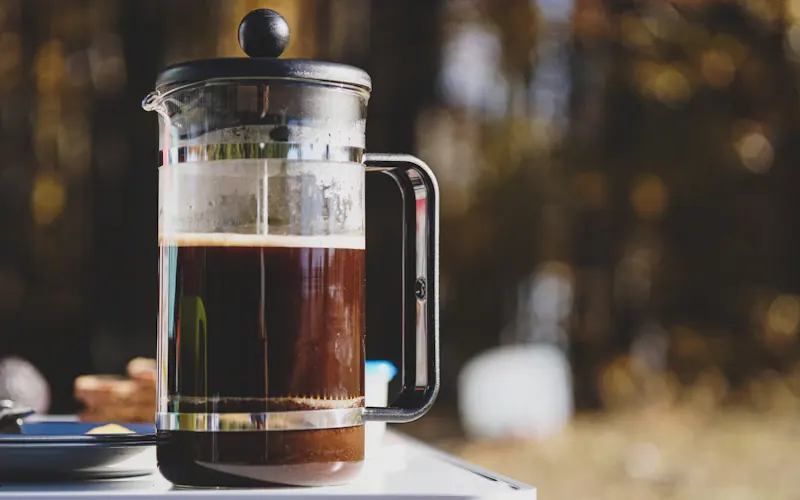
- Office coffee is one of those workplace topics that generates disproportionate friction relative to its actual cost. Everyone has an opinion, nobody wants to be responsible, and the result is usually a mediocre machine fed with mediocre coffee.
- Group purchasing is the highest-leverage variable for quality at constant budget: ordering 5 kg at a time rather than 500 g often unlocks volume pricing, provided storage and rotation are right.
- For teams with mixed tastes, run two options side by side: a lighter filter coffee (ratio 1:15) and a stronger espresso-style drink (ratio 1:2).
Office coffee is one of those workplace topics that generates disproportionate friction relative to its actual cost. Everyone has an opinion, nobody wants to be responsible, and the result is usually a mediocre machine fed with mediocre coffee that satisfies nobody, while individuals quietly spend far more on takeaway cups every day. This guide offers a practical, rational approach to setting up collective coffee that is genuinely good, sustainably organized, and honestly costed.
Why does office coffee so often fail?
Most office coffee setups follow a predictable arc: a machine is purchased (or provided under a supply contract), stocked with industrial coffee at the cheapest possible price, neglected in terms of maintenance, and eventually abandoned as team members migrate to takeaway cups at their own expense. The total cost per cup of this scenario is often €0.80 or more, worse quality than a decent home setup, at a higher price.
The failure is structural, not financial. Nobody defined who is responsible for what, what quality level the team actually wants, or how costs should be shared equitably. The first step is organizational, not technical.
Which four questions should you answer before buying anything?
Answer these before evaluating any machine or coffee supplier:
- How many cups per day? Estimate 2-3 cups per person per working day present. For 15 people attending 4 days a week, that is roughly 100-150 cups per day.
- What is the budget per person per month? €5/month/person is a sensible floor for decent coffee. €10 gives access to genuinely good specialty coffee.
- Who manages restocking? A monthly rotation among colleagues, or one designated person with expense reimbursement.
- What are the constraints? Open-plan offices may exclude loud grinders. Meeting rooms may need a fast, self-contained solution. These constraints narrow the choice considerably.
What are the three main office coffee solution families?
Bean-to-cup (superautomatic) machines
Superautomatic machines grind, dose, and extract in a single operation. They are ideal for teams who want espresso-style drinks without barista training. Quality in cup is good, provided the coffee beans are good. This is where most installations fail: a €1,200 machine fed with €7/kg industrial beans will never deliver great results. The machine is not the limiting factor; the coffee is.
Pros: maximum convenience, no skill required, automatic cleaning cycles on modern models. Cons: high purchase cost (€800-3,000 for intensive use), built-in grinder of variable quality, single point of failure if the machine breaks down.
Batch brew machines
Batch brewers prepare large volumes (1-2 litres) in a single brew cycle. They are the most economical and lowest-maintenance solution. A good thermal carafe preserves temperature without reheating (which oxidises the coffee and degrades flavour). Cup quality depends entirely on the coffee used and how fresh the grind is, a separate burr grinder transforms results.
Pros: low cost (€50-300), high reliability, easy to use, serves multiple people simultaneously. Cons: no espresso, less individual customisation, best results require a separate grinder.
Capsules and pods
Capsules are genuinely convenient, zero grinder maintenance, standardised dosing, wide range of references. But they represent the highest cost per cup of any solution (€0.35-0.80 per capsule), generate significant waste, and the quality in cup rarely justifies the price. For a ten-person office drinking 30 cups a day, capsule costs can reach €250-500 per month, compared to €40-80 for equivalent batch brew or bean-to-cup with good beans.
How do you choose by team size?
Team size is the first selection filter:
- 2-5 peopleManual or semi-automatic machine with a separate grinder, or a small batch brewer. Low budget, maximum flexibility.
- 6-15 peopleQuality batch brewer (plus grinder) or entry-level commercial superautomatic. Specialty bean subscription recommended.
- 16-50 peopleSemi-commercial superautomatic or double-capacity batch brewer. Service contract advisable.
- 50+ peopleCommercial machine with a full-service contract, or a quality vending provider. At this volume, externalising maintenance is cost-effective.
How do you organise group coffee buying for the office?
Group coffee purchasing is the single highest-leverage variable for quality at constant budget. Buying 5 kg per order rather than 500 g at a time often unlocks volume pricing from specialty roasters. The condition is having adequate storage: airtight opaque containers, away from heat and humidity, with regular rotation to avoid accumulating stale coffee.
A monthly subscription from a specialty roaster is often the optimal solution: automatic delivery, guaranteed freshness (coffee roasted within the week), and the opportunity to rotate through different origins and processing methods by season.
How do you share machine maintenance without conflict?
Machine maintenance is the primary source of tension in shared setups. A few simple rules prevent most problems:
- Daily grounds disposalLast user of the day, or a weekly rotation posted on the machine.
- Filter cleaningWeekly minimum. A visible checklist with tick boxes creates accountability without blame.
- DescalingMonthly in hard-water areas (common in central Belgium: check the hardness figure from your water supplier), quarterly in soft-water zones. Use a descaler compatible with the machine.
- Restocking signalA simple physical signal (empty bag placed in front of the machine = order needed) or an automatic subscription sidesteps the restocking reminder problem entirely.
What does each office coffee solution really cost per cup?
| Solution | Machine cost (€) | Coffee cost/kg (€) | Cups/kg | Coffee cost/cup (€) | Total est./cup (€) |
|---|---|---|---|---|---|
| Aluminium capsules | 100-300 | 60-120 (equiv.) | ~70 | 0.40-0.80 | 0.42-0.85 |
| ESE paper pods | 50-200 | 25-50 (equiv.) | ~70 | 0.20-0.35 | 0.22-0.38 |
| Batch brew (ground coffee) | 50-300 | 12-25 | ~60 | 0.10-0.22 | 0.13-0.28 |
| Batch brew + grinder (beans) | 200-600 | 12-25 | ~60 | 0.10-0.22 | 0.15-0.32 |
| Bean-to-cup superautomatic | 800-3,000 | 12-25 | ~55 | 0.12-0.25 | 0.18-0.38 |
| Commercial machine + contract | rental | included or separate | variable | variable | 0.20-0.50 |
Machine cost per cup calculated over 3 years at 30 cups/day. Specialty coffee (€18-30/kg) adds €0.05-0.15/cup depending on brew ratio.
Which coffee should you choose for collective use?
Collective coffee does not mean compromising on quality, but it does require thinking about profile. Avoid highly polarising coffees (intensely fruity naturals for an unaware audience, or very dark bitter roasts). A balanced espresso or filter blend, hazelnut, chocolate, gentle sweetness, works for the widest range of tastes. Roast date matters: buy fresh (under six weeks from roast), in sealed bags with a degassing valve.
For heterogeneous teams, offering two simultaneous options can defuse tension: a lighter filter coffee (ratio 1:15) and a more concentrated espresso-style drink (ratio 1:2). This dual-track approach costs a little more in equipment but dramatically improves collective satisfaction.
Office coffee is not a matter of personal taste, it is a collective protocol question. An average machine with excellent coffee and a rigorous maintenance schedule will always outperform an excellent machine with mediocre coffee and no cleaning routine.
How do you set up a quality office coffee system that scales?
The office coffee setup that consistently produces good coffee for a group is fundamentally different from a home setup, the scale demands different thinking about workflow, consistency, and maintenance that home-focused advice rarely addresses. Understanding what changes at office scale prevents the most common collective coffee failures: the machine that works for the first user of the day but degrades for subsequent users, the grinder that produces acceptable results when maintained but is never maintained, and the purchasing cycle that prioritises cost over freshness.
Volume is the first design constraint. A home setup designed for two cups per day, a compact single-boiler espresso machine, a hand grinder, one bag of coffee per week, scales poorly to ten or twenty office users. The machine that performs adequately for one or two daily uses will be perpetually in heat recovery mode in a ten-user office, producing inconsistent shot temperatures and frustrated users. The grinder that requires hand cranking for 60 seconds per dose becomes a bottleneck and a deterrent at the tenth dose of the morning. Designing to a realistic daily dose volume, counting active users, estimating drinks per person per day, is the prerequisite for any other equipment decision.
For groups of 5-15 people, a prosumer espresso machine with dual boilers or a heat exchange system, providing consistent brewing temperature without extended recovery time between shots, is the minimum specification for quality espresso service. At this scale, a commercial-grade grinder with a doser or on-demand grinding replaces the home hand grinder: something like the Baratza Forte, Eureka Atom, or Mahlkönig X54 provides the grind consistency and volume capacity that this user count requires. Filter coffee for offices is often better served by a quality filter machine with a thermal carafe, the Moccamaster or Technivorm equivalent, that brews a full batch quickly and maintains temperature in the carafe without the bitterness-causing hotplate degradation of standard drip machines.
Water quality management is more urgent at office scale than at home. A machine processing 20-40 shots per day in hard-water conditions will show limescale build-up significantly faster than a home machine processing 2-4 shots. Installing an appropriate filtration system, Brita Professional, BWT, or Everpure, at the water connection point prevents the scale that degrades heating element efficiency, reduces machine life, and affects extraction quality. The cost of a commercial water filter is modest relative to the cost of a descaling service call or premature machine replacement, and the quality improvement in heavily scaled offices is immediately perceptible.
How do you make office coffee work for diverse preferences?
The most thoughtfully specified office coffee setup will still fail if the collective usage dynamics undermine it. Offices contain multitudes, espresso aficionados, people who add three sugars and oat milk, someone who insists on decaf, someone who brings their own tea and never touches the coffee machine but was consulted in the budget meeting. Managing diverse preferences while maintaining quality for those who care requires some practical social architecture alongside the equipment decisions.
A two-track system, one espresso-based option and one batch brew option, serves most office coffee needs more effectively than trying to make a single system work for everyone. The espresso machine caters to cappuccino and latte drinkers and the minority who want a straight shot; the filter machine caters to the larger group who want a hot cup of coffee with minimal effort and variable strength preferences. Running both tracks requires more equipment investment but dramatically reduces the queue at any single machine and allows each system to be optimised for its specific use case rather than compromised to serve both.
The freshness procurement cycle is the variable most frequently neglected in office coffee quality. An office that buys 2 kg of coffee once a month, and consumes it over the full month, will serve excellent coffee in week one and mediocre coffee in week four. Shifting to smaller, more frequent orders, 500g per week rather than 2 kg per month, dramatically improves the average cup quality across the month. Most specialty roasters offer office accounts with recurring weekly or bi-weekly delivery; the unit price may be slightly higher than bulk purchasing but the quality improvement is immediate and appreciated. Communicating the roast date to the office community, "fresh beans arrived today, ground to order", creates the kind of small cultural signal that builds collective investment in the coffee quality.