☕ Key takeaways
- Natural process means drying the whole unpeeled cherry for 15 to 35 days. Fermentation happens spontaneously inside the fruit and pushes intensely fruity, wine-like character into the bean.
- Ethiopia and Yemen are the historical homes of the method; Brazil scaled it up because water was scarce, and its naturals read cleaner and more neutral than the African originals.
- The primary risk is fermentation defect (over-fermentation, mould) if drying is not carefully controlled: a natural's quality depends entirely on the care taken in monitoring cherry condition during drying.
Natural Coffee Guide: Drying in Cherry, Intense Fruit, Risks
What are the three key takeaways on natural process coffee?
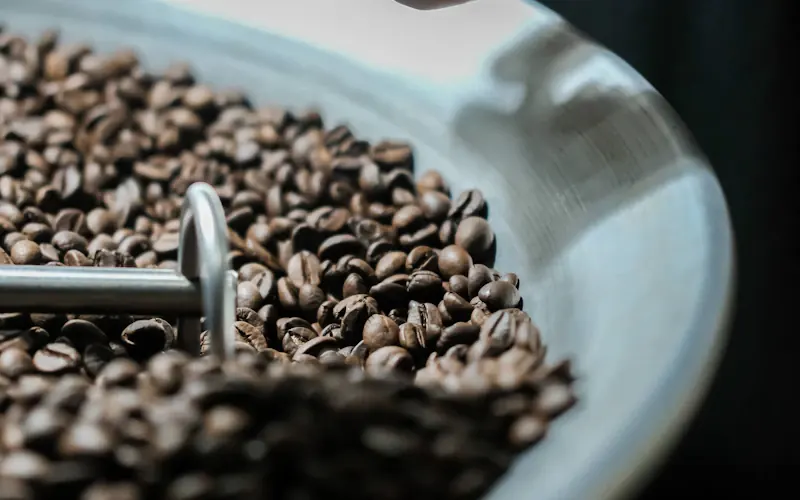
- Labels that promise wild strawberry, blueberry jam or dark cherry wine are almost always naturals: the whole cherry dried around the seed for 15 to 35 days, and the fermenting fruit left its mark.
- Natural is not automatically the expensive option. Commodity naturals trade below washed milds; the premium appears only in specialty, and only for clean fruit.
- The natural process is the least forgiving method there is. Over-fermentation, mould and uneven drying are the three failures worth knowing about before you buy.
Have you ever picked up a bag of coffee and noticed notes like "wild strawberry," "blueberry jam," or "dark cherry wine" on the label, and wondered how coffee beans could possibly taste like that? The answer lies in one of the oldest, most dramatic, and most debated processing methods in the world: the natural process. Also called the dry process, it's the method where the entire coffee cherry, skin, fruit pulp, mucilage and all, is left wrapped around the seed while it slowly dries in the sun. What happens during those weeks of drying shapes everything you'll taste in your cup.
What is the natural process, exactly?
When a coffee cherry is harvested, it looks a lot like a small grape, a firm outer skin, soft fruit pulp underneath, a sticky layer called mucilage, a papery parchment shell, and finally the green coffee bean inside. Most processing methods remove all that fruit as quickly as possible, using water (the washed process) or mechanical scrapers (honey process). The natural process does none of that. The whole cherry goes directly onto a drying surface, and nature does the work over weeks.
As the cherry dehydrates, the fruit ferments. Yeasts and bacteria break down the sugars in the pulp. Those by-products, aromatic compounds, organic acids, fermentation metabolites, migrate through the parchment and into the bean itself. It's a bit like how wine grapes left on the vine after harvest develop dried fruit and concentrated sweetness: the coffee bean essentially "marinates" in its own fermented fruit.
Where does natural process coffee come from?
The natural process was born out of necessity in dry climates where water is scarce. Ethiopia, the birthplace of arabica coffee, has practised this method for centuries. The Sidama, Guji, Harrar and Kaffa regions all have long dry seasons and intense sun, ideal conditions for slow, even drying. Yemen developed its own tradition of drying cherries on rooftops, which is why Yemeni coffee often has those characteristic fig-and-date notes.
Brazil brought the natural process into the industrial era. The vast flat areas of the Cerrado Mineiro and Minas Gerais state, combined with reliable dry seasons, allowed large-scale natural processing that made Brazilian coffees the dominant force in global espresso blends. Today, natural processing is also gaining ground in Guatemala, Costa Rica, Honduras, and parts of Southeast Asia, where producers use it as a quality differentiation tool to access specialty markets.
How does a cherry become a green bean on a drying bed?
- Selective hand-picking. Only fully ripe cherries (typically deep red or yellow) are harvested. Unripe green cherries in a natural lot introduce grassy, astringent defects. The best naturals come from careful hand-picking, not mechanical harvesting.
- Flotation sorting. Cherries are floated in water: immature, defective or hollow ones float and are removed. This simple step dramatically improves consistency.
- Spreading on raised drying beds. Cherries go down in a very thin layer, roughly 2-4 cm, on raised mesh tables known as African beds, which let air move above and below. The layer is only piled deeper once the cherries have firmed up and lost most of their free water. Concrete or brick patios are also used, though beds give better control.
- Regular turning. Every 2-4 hours during daylight, workers turn the cherries by hand to ensure even drying and prevent anaerobic pockets from forming in compressed layers. This is labour-intensive and often shortcut in lower-quality operations.
- Covered at night. Cherries must be covered or brought inside overnight to prevent re-absorption of dew, which could introduce unwanted moisture and mould.
- 15 to 35 days of drying. A ripe cherry starts at roughly 60-70% moisture and has to come down to the 10-12% band the International Coffee Organization sets for exportable green coffee. Specialty buyers usually pair that reading with water activity, aiming below 0.60, because above 0.70 moulds grow unchecked. Duration depends on altitude, humidity and temperature. Higher altitude and cooler nights slow fermentation, producing cleaner, more floral profiles.
- Dry milling. Once moisture is correct, the dried cherries pass through a hulling machine that removes the dehydrated fruit, parchment and silver skin in one pass, revealing the green coffee bean.
- Final sorting and grading. Optical or electronic sorting removes black beans, partial ferments and shape defects before bagging.
What does natural process coffee taste like?
Natural process coffee has one of the most recognisable flavour profiles in the specialty world. If you're new to it, expect to be surprised, sometimes delighted, occasionally puzzled. The fruit transfer during drying creates a sweetness that's fundamentally different from any other processing method.
- Dominant flavours: wild strawberry, blueberry, raspberry, dark cherry, dried cranberry, grape, prune, sometimes red wine or a hint of aged whisky
- Body: thick, syrupy, coating, which is why naturals are popular in milk-based drinks and as a base for cappuccinos
- Acidity: soft and rounded, often perceived as malic acid (like stewed apple or plum) rather than the bright, snappy acidity of a Kenyan washed
- Finish: long, chocolatey or confited, sometimes with a pleasant boozy warmth in heavily fermented examples
- Sweetness: inherently higher than washed, you'll often notice it doesn't "need" sugar the way some other coffees do
What can go wrong when a natural is dried badly?
The natural process is beautiful when it works. But it's also the most unforgiving method to execute. Here's what can go wrong and why it matters when you're choosing a coffee.
- Over-fermentation ("wild" or "fermented" defect): When drying takes too long or conditions are too humid, fermentation goes too far. Acetic, butyric and propionic acids build up, creating a vinegary, barnyard or composty note. No roasting technique can fully rescue an over-fermented lot.
- Mould and ochratoxin A: In humid conditions, fungi colonise the cherry. The ochratoxin A producers identified on coffee are chiefly Aspergillus species, notably ochraceus, carbonarius and niger. The toxin is subject to regulated maximum levels in the EU, which is why reputable importers test their lots and why cheap naturals from unknown sources carry real risk.
- Uneven drying: "Hot spots" on drying beds leave partially fermented or insufficiently dried beans that rupture during roasting and wreck cup consistency. Worth keeping separate from potato taste defect, a Great Lakes problem (Rwanda, Burundi, DRC, Uganda) linked to Antestiopsis bug damage and the microorganisms that follow it into the cherry, rather than to how the lot was dried.
- Faster ageing after roasting: Natural coffees lose their fruit aromatics faster than washed coffees. Most roasters recommend drinking them within 4-6 weeks of roast date.
What should you look for on a natural process label?
Armed with the right information, you can make educated choices before buying.
- Altitude: Above 1,600 m for clean, floral, precise naturals from Ethiopia or Central America. Lower altitudes (under 1,200 m) tend towards simpler, less expressive profiles.
- Drying time: 20-30 days is the sweet spot. Shorter risks under-fermentation; longer risks the barnyard spiral.
- Roast date: Fresher is more important for naturals than almost any other process. Under 4 weeks is ideal; beyond 8 weeks, the fruit notes will have largely faded.
- SCA score: The SCA specialty threshold sits at 80 points out of 100, with no more than five primary defects per 300 g sample. From 80 to 84.99 a coffee is graded Very Good, from 85 to 89.99 Excellent. For a natural, 85 and up is where the fruit tends to read clean with no detectable ferment defect.
- Variety: Ethiopian Heirloom, Gesha, and Yellow Bourbon each express the natural process differently. Variety matters as much as origin.
How does natural stack up against washed, honey and anaerobic?
| Process | Water used | Processing time | Dominant profile | Body | Quality risk |
|---|---|---|---|---|---|
| Natural (dry) | Very low | 15-35 days | Red fruits, wine, chocolate | Heavy | High (fermentation) |
| Honey | Moderate | 10-25 days | Stone fruit, honey, caramel | Medium-heavy | Medium |
| Washed | High | 12-36 h ferment + 12-18 days drying | Floral, bright acidity, terroir clarity | Light-medium | Low |
| Anaerobic | Variable | 24-120 h (tank) + drying | Exotic, spice, tropical | Medium-heavy | High if poorly controlled |
| Wet-hulled | Moderate | Fast (2-4 days) | Earthy, woody, heavy body | Very heavy | Medium |
Is natural worth the extra money?
Start with the commodity market, because it punctures the assumption. In June 2026 the International Coffee Organization's Brazilian Naturals group indicator averaged 272.01 US cents/lb, about $6.00/kg, while the washed Other Milds averaged 307.83 US cents/lb (roughly $6.79/kg) and the Colombian Milds 324.60 US cents/lb (roughly $7.16/kg). Bulk naturals sit below washed milds, not above them.
Specialty flips that, but not because of the process label. What buyers pay for is the labour and the risk behind a clean lot: selective picking, raised beds, daily turning, altitude, and a producer who accepts that a bad fortnight of weather can write off a batch. A poorly dried natural still sells for less than a clean washed from the same farm. And a heavy roast on a fruity natural is usually a warning rather than a style choice, since dark roasting is the standard way to bury a ferment defect.
A great Ethiopian natural is often the coffee that converts people to specialty. It requires no explanation, the fruit speaks for itself. But that same fruit can become a flaw if drying management is careless. The natural process is generous with the skilled and merciless with the negligent.