Moka Pot Overflowing or Not Brewing: Causes and Fixes
Overflowing, or a violent surge, mainly comes from heat that is too high, packed or too-fine coffee, a worn gasket, or a water level above the safety valve. Conversely, coffee that will not come up almost always means too little water, heat too low, or a leaking gasket. The golden rule: gentle heat, no tamping, water just below the safety valve, a clean gasket and a medium moka grind.
- A moka pot runs on steam pressure: anything that upsets pressure or water flow makes it sputter or stall
- Overflow or sputter: heat too high, coffee packed or too fine, water too high, worn gasket
- Coffee not coming up: not enough water, heat too low, leaking gasket or cross-threaded seal
- Water always just below the safety valve, which must never be blocked
- Medium moka grind, between espresso and filter, and you never tamp
- Low to medium heat, and you cut it at the first gurgle
Why does a moka pot overflow or refuse to brew?
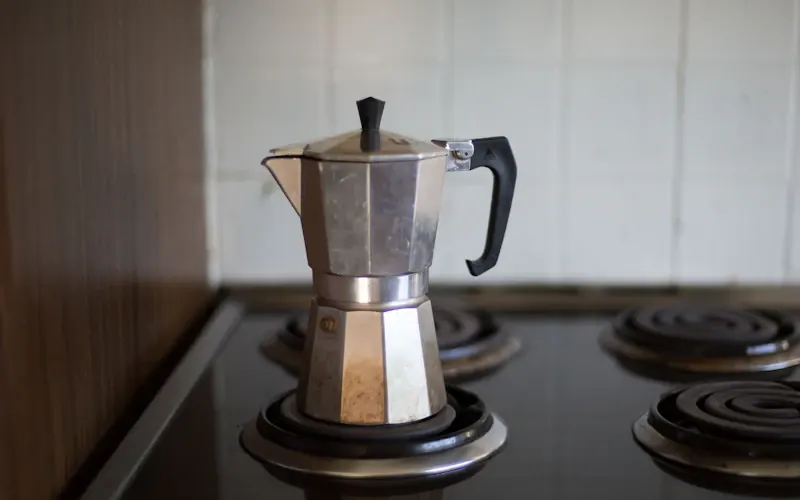
A moka pot does not work like an espresso machine. A base of water heats up, the steam builds pressure, pushes the hot water through the ground coffee, and the brew rises up the central column into the top chamber. Everything hinges on that delicate balance between pressure, water level and the coffee's resistance. When a brew overflows, sputters or refuses to rise, it almost always means one of those three is off. Here are the causes that come up most often.
Heat too high is the number-one culprit behind overflows. A fierce flame spikes the pressure all at once: the coffee shoots up in a noisy jet, sputters out of the column and overflows, scorching as it goes. Low to medium heat gives a slow, steady rise, far cleaner and far sweeter in the cup.
Packed or too-fine coffee blocks the water's path. Unlike espresso, you never tamp a moka pot. If you compact the grind or grind it too fine, resistance climbs, pressure builds under the filter, and the coffee eventually erupts, or stops passing altogether. The funnel filter is filled level, with no dense puck.
Water above the valve is a classic cause of sputtering. If you fill the base too high, above the safety valve, there is no longer enough room for steam: the pressure turns unstable and the brew breaks into splatters. The water must always stay just below the valve.
A worn gasket or clogged filter cut both ways. A hardened, cracked or misplaced rubber gasket lets steam leak between the two halves: pressure no longer builds enough and the coffee stays trapped in the base. A small metal filter plate clogged with oils and fines does the opposite, creating an over-pressure that makes it sputter.
Finally, a poor seal rounds out the picture. A pot screwed crooked, not tight enough, or with a pinched gasket leaks at the threads: steam escapes, pressure drops, and the coffee will not rise, or struggles to pass. Screw it straight and firmly, without cross-threading.
How do you fix a moka pot that sputters or stalls?
This routine stabilises the brew and handles both the moka pot that overflows and the one that will not rise. As always, change one thing at a time so you know what corrected it.
- Fill the water just below the safety valve. Pour into the base without ever going past the valve. Too much water sputters and overflows, too little and the coffee will not come up. It is the simplest setting and the most often overlooked. Pre-heated kettle water also limits any overheated taste.
- Dose without tamping. Fill the funnel filter level with grounds, then settle the surface with a fingertip. Above all, do not tamp: a dense puck blocks the water and spikes the pressure. The coffee should sit flush with the rim, freely.
- Use a moka grind. Aim for a medium grind, between espresso and filter. Too fine, it clogs and sputters; too coarse, the coffee rushes up and tastes thin. The grind size by method guide places the moka setting among the others.
- Check the gasket and filter. Make sure the rubber gasket is supple, clean and well seated, and that the small metal filter plate is not clogged. Replace a hardened or cracked gasket: it is a wear part that needs swapping regularly. A sound gasket is the condition for a good rise.
- Screw it straight and heat gently. Screw the top on firmly, squarely on the axis, without pinching the gasket. Place it on low to medium heat, never full blast. A slow rise avoids sputtering and preserves the aromas.
- Cut the heat at the first gurgle. As soon as the coffee gurgles and the stream turns pale and noisy, take it off the heat. You can cool the base under cold water to stop the brew sharply. Leaving it on too long overheats and embitters the coffee.
If the moka pot keeps sputtering or stalling after these steps, return to the fundamentals of the method in the moka pot guide: water, dose and heat form an inseparable trio.
Overflow, stall or steam leak: what is your moka pot telling you?
| Symptom | Likely cause | Fix |
|---|---|---|
| Coffee shoots up in a noisy jet and overflows | Heat too high | Lower to low or medium heat, cut at the first gurgle |
| Violent surge or stalled brew | Coffee packed or ground too fine | Do not tamp, use a medium moka grind |
| Water sputters as soon as it heats | Water filled above the valve | Fill just below the safety valve |
| Coffee will not rise, base stays full | Too little water or heat too low | Water just below the valve, medium rather than minimal heat |
| Steam leaks between the two halves | Worn gasket or crooked seal | Replace the gasket, screw straight and firmly |
| Over-pressure and sputtering despite a sound recipe | Clogged metal filter | Clean the filter plate, clear the holes |
What does the safety valve on a moka pot actually do?
A moka pot works under steam pressure, and it is the safety valve on the base that stops that pressure from becoming dangerous. It must never be blocked, nor submerged by the water level. Keep the water always below the valve, and check now and then that it is not scaled up or clogged by coffee deposits.
A few simple habits remove all risk: never force a pot that seems stuck and still hot, do not unscrew the moka mid-brew, and use the handle to move the hot appliance. If the valve releases a continuous jet of steam, that signals over-pressure: cut the heat, let it cool, then find the cause (grind too fine, packed coffee, clogged filter) before brewing again.
Frequently asked questions
Why does my moka pot overflow?
A moka pot that overflows or sputters usually comes from heat that is too high, coffee packed or ground too fine, a water level above the safety valve, or a worn gasket. Lower the heat, never tamp the coffee, fill the water just below the valve and use a medium moka grind, between espresso and filter.
Why is the coffee not coming up in my moka pot?
When the coffee does not come up, it is almost always too little water in the base, heat too low to build pressure, or a leaking gasket letting steam escape. Check the water level (just below the valve), use medium heat rather than the lowest setting, and make sure the gasket is supple and seated and the pot is screwed straight and firmly.
What grind should I use for a moka pot?
A moka grind sits between espresso and filter: neither fine powder nor coarse chunks. Too fine, it clogs the filter and makes the brew sputter and overflow; too coarse, the coffee rushes up and comes out thin and flat. An even medium grind lets water pass at the right pace and gives a strong but clean cup.
Should I tamp the coffee in a moka pot?
No. Unlike espresso, you never tamp the coffee in a moka pot. Fill the funnel filter level and simply settle the surface with a fingertip. Tamped coffee raises the resistance, spikes the pressure and causes sputtering, overflow or a stall. The coffee should sit flush with the rim without forming a dense puck.