Milk Not Frothing: Causes and Fixes
Hot milk with a flat, dull surface is the classic failed jug, and the cause is rarely mysterious. Past roughly 65 °C the whey proteins unfold, the film around each bubble gives way, and the foam has nothing left to stand on. The same flat result comes from a tip buried too deep, from milk that started lukewarm or has already been steamed once, from skimmed milk, from a standard non-barista plant drink, or from wand holes clogged with dried milk. Work in this order: cold milk, purge the wand, tip just under the surface to aerate, deeper to spin a vortex, steam off at 60-65 °C, tap and swirl before pouring.
- Caseins get the foam up, whey proteins keep it standing
- Target temperature: 60-65 °C; never exceed 70 °C
- Starting with well-chilled milk (4-6 °C) gives more time to add air
- Milk already steamed once will not texture again: start over with fresh milk
- The wand position just below the surface controls aeration
What is going wrong when milk refuses to froth?
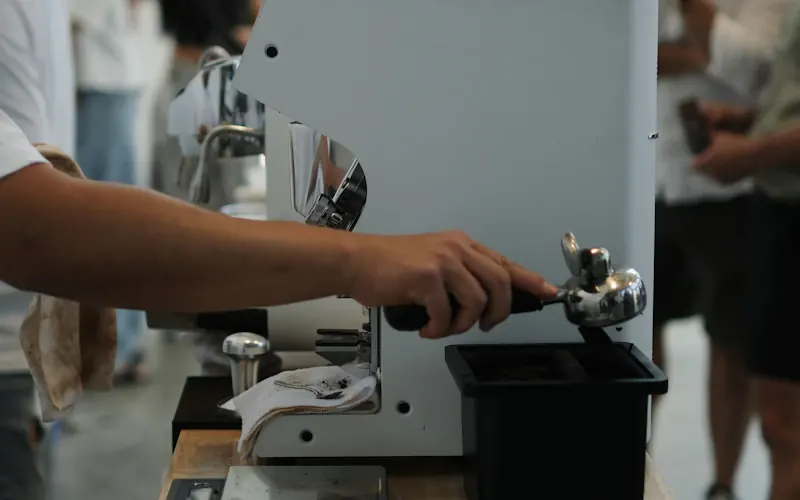
A jug that will not froth is a fault to be traced, not bad luck. Steam folds tiny air bubbles into the liquid, and those bubbles need a protein wall to survive. The caseins move fast to the air-liquid interface and drive the initial rise in volume, which is foamability. The stiffer whey proteins then knit the film that stops bubbles merging, which is stability. Fat does neither; it only adds body in the cup. When the foam fails, one of these five causes is behind it.
1. Milk that isn't cold enough to start
The colder the milk when you begin, the longer your aeration window before reaching target temperature. Lukewarm milk hits 60-65 °C too fast, before you have folded in enough air. Take the milk straight from the fridge, ideally at 4 to 6 °C. Milk that has already been steamed once gives the same symptom: its proteins went through the first pass, they no longer trap air, and you get a slack foam full of coarse bubbles. Leftovers in the jug do not get a second life.
2. Overheating beyond 65-70 °C
This is the most common mistake. Whey proteins start to denature from about 65 °C, with clear unfolding between 67 and 72 °C at milk pH: the film around each bubble gives way, the foam collapses and the milk turns cooked, even sulphurous. Casein micelles stay heat stable across that range, which is why overheated milk still rises a little at first and then will not hold. The sweet spot is between 60 and 65 °C, where lactose shows its natural sweetness and the foam stays glossy.
3. Skimmed or problematic UHT milk
Skimmed milk foams easily but produces a dry, stiff foam made of large bubbles that collapse fast, with no fat to give body. Some UHT milks, depending on their heat treatment, also froth less well than fresh pasteurised milk. For silky microfoam, fresh whole milk remains the safe bet.
4. Non-barista plant milk, low in protein
Most standard plant milks (oat, almond, rice) are low in protein, or contain proteins that stabilise bubbles poorly. The result: little or very unstable foam. The barista versions add proteins, stabilisers and sometimes a little fat to mimic the behaviour of dairy milk. Soy, naturally higher in protein, often froths better than unformulated oat.
5. A weak or badly positioned steam wand
Even with the right milk, a poorly positioned wand ruins the foam. If the tip is too deep you heat without aerating: no foam. If it is too shallow you spray milk and create large, unstable bubbles. The correct position is just below the surface, slightly off-centre, to create a whirlpool. Two hardware faults look identical from the outside. A clogged wand, with one or more holes blocked by dried milk, blows sideways and never sets up a vortex: unscrew the tip, soak it, and clear the holes with a pin. A small boiler on an entry-level machine simply takes longer to build pressure, so wait for the steam light, purge until the jet runs dry, and work a smaller volume of milk.
How do you rescue a jug that will not texture?
Six moves rescue almost any jug, in this order, on any machine with a steam wand: cold milk, purge, tip at the surface to aerate, tip deeper to texture, steam off at 60-65 °C, tap and swirl.
- Start with well-chilled milk. Take it straight from the fridge (4-6 °C). Fill the steel pitcher to about a third to leave room for expansion.
- Purge and position the wand. Open the steam for two to three seconds into the air to clear condensation, then set the tip just below the surface, slightly off-centre.
- Introduce air (aeration). Open the steam fully. Keep the tip at the surface for the first few seconds: a gentle, steady hiss tells you air is entering. The volume should grow by about a third.
- Texture and heat (rolling). Submerge the tip slightly to stop aeration and start a vortex that refines the bubbles. Heat to 60-65 °C.
- Cut the steam at the right moment. As soon as the pitcher is too hot for your palm (around 65 °C), stop. Never exceed 70 °C or the foam collapses.
- Polish the foam. Tap the pitcher on the counter to pop large bubbles, then swirl the milk into a glossy, uniform texture, like wet paint, before pouring.
Which milk symptom points to which cause and which fix?
| Symptom | Likely cause | Fix |
|---|---|---|
| No foam, milk just hot | Wand too deep or too little aeration time | Raise the tip to just below the surface at the start |
| Foam collapses fast, cooked taste | Overheating beyond 70 °C | Cut the steam at 60-65 °C, restart with fresh milk |
| Large, stiff, dry bubbles | Skimmed milk or too much aeration | Switch to whole milk; shorten the aeration phase |
| No foam with plant milk | Standard plant milk low in protein | Use a barista version (soy or oat) |
| Milk sprays, loud churning | Tip too shallow at the surface | Submerge the wand slightly after the air phase |
| Slack foam, no vortex, steam jet blowing sideways | Milk already steamed once, or clogged wand tip | Start again with fresh cold milk; soak and clear the tip holes |
Why does a standard oat drink collapse where dairy holds?
A standard oat or almond drink has nothing in it to build a bubble wall with. The technique is the same, the outcome is not: you hear the hiss, the volume barely rises, and whatever did rise sinks back into the jug within seconds. That is the liquid failing, not your hands.
So run the diagnosis on the carton before you run it on the jug. If the pack does not say barista, treat it as unsuitable for a steam wand and swap it rather than persist: barista formulations carry what it takes to hold a film, a standard version does not. Two habits finish the triage. Check how long the carton has been open, because a plant drink opened several days ago froths noticeably worse, and shake it before pouring, since the solids settle. Then cut the steam earlier, nearer 60 °C: these drinks split faster than dairy, and once split they cannot be recovered.
Frequently asked questions
Why won't my milk froth at all?
Work through the checks in order: cut-off temperature, tip depth, state of the milk, state of the wand. Milk won't froth when it is heated beyond about 65 °C, because the whey proteins denature and the bubble film gives way, when the tip is buried too deep and heats without aerating, when the milk started lukewarm or has already been steamed once, when it is skimmed, when it is a standard plant milk with no barista formulation, or when the wand holes are clogged. Aim for silky microfoam at 60-65 °C with well-chilled whole milk.
Does whole milk froth better than skimmed milk?
Yes, though not for the reason most people assume. Skimmed milk actually foams faster, but it piles up coarse, dry bubbles that slump within a minute. Whole milk rises more slowly, needs a shorter aeration phase and gives a glossy foam that actually pours. If your foam looks like shaving cream, change the milk before you change your technique.
Why won't my plant milk froth?
Check the carton before you blame your hands. A standard version is not formulated for a steam wand: it barely lifts, or it sinks straight back. Take a pack explicitly labelled barista, check it has not been open for several days, shake it before pouring, and cut the steam earlier, nearer 60 °C, because these drinks split faster than dairy milk.
What temperature should I heat the milk to?
Cut the steam between 60 and 65 °C: that is the range where lactose shows its natural sweetness and the foam stays stable. Whey proteins begin denaturing from about 65 °C and unfold clearly between 67 and 72 °C, so the film around the bubbles gives way, the milk turns cooked and the foam collapses. Without a thermometer, a pitcher that has become too hot to hold in your palm is the cue to stop.
Read more: All guides · Specialty coffee FAQ · Coffee glossary