Milk foam full of big bubbles: how to get microfoam
Timing, more than technique, is what makes a big bubble. Air belongs in the first two to four seconds, while the milk is still cold. After that the wand goes deeper and the whirlpool shreds whatever went in. Aerate late, or go back for more air mid-jug, and the bubbles set for good.
- Air goes in first, briefly, near the surface: this is the aeration phase
- The whirlpool then breaks big bubbles into microbubbles: it is essential
- Cut the steam at 60-65 °C, never above 70 °C
- Whole milk or a barista plant-based drink foams better than skimmed or standard plant milk
- A wand that is too deep or aeration that runs too long inevitably produce big bubbles
At which stage of steaming do big bubbles appear?
In the aeration window, those few seconds when the wand hisses just under the surface. While the milk is still cold, the air that goes in stays fine enough for the roll to break it down. Once the jug passes body temperature, roughly 37 to 40 °C, incoming air gathers into pockets that nothing can shred, and the big bubble is already cast. Wand depth and milk choice only shift or worsen that same moment.
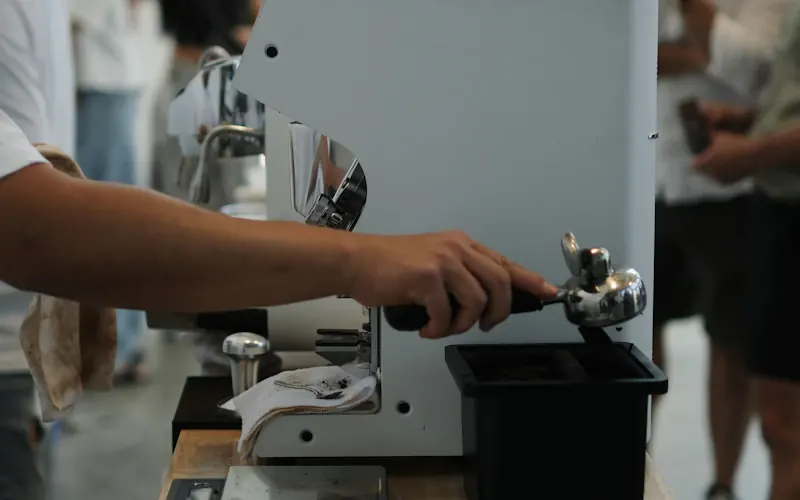
Good foam is an emulsion: tiny air bubbles spread evenly through the milk, giving that glossy wet-paint texture. Big bubbles are a sign that air was incorporated in too large a quantity, too late, or without being redistributed. Here are the most common causes.
Wand too deep. If the wand plunges deep from the start, it heats the milk without drawing controlled air near the surface. When air finally enters, it does so in bursts and forms large pockets rather than a fine emulsion.
Aeration too long or too late. The phase during which you hear the light tssss of air being drawn in should stay short, two to four seconds, and happen at the very start while the milk is still cold. Prolonged, or triggered once the milk is already hot, it injects too much air and sets bubbles that nothing afterwards can break.
No rolling. After aeration, the milk must roll on itself in a whirlpool. This movement breaks big bubbles into microbubbles and homogenises the texture. Without a whirlpool, the bubbles stay large and separate from the liquid milk.
Skimmed or non-barista plant milk. Skimmed milk foams fast but dry and bubbly. Standard plant-based drinks (oat, soy, almond) without a barista formulation lack the proteins and stabilisers that hold microbubbles: they produce coarse, unstable foam.
Overheating. Above 70 °C, milk proteins denature, the foam stiffens, and any big bubbles already present set permanently. Milk pushed too hot can no longer be rescued.
How long should the air phase last before the roll takes over?
Two to four seconds of air, no more, and all of it at the start. The roll then runs on until the jug is too hot to hold, and the steam goes off last. Going back for air once the whirlpool has started only buys you bubbles the jug no longer has time to refine. Here is the full sequence.
- Position the wand just below the surface. Fill a cold pitcher one third. Place the steam wand just below the milk surface, slightly off-centre toward the spout, then open the steam fully. The off-centre placement sets up the whirlpool to come.
- Introduce air early and briefly. For the first two to four seconds, lower the pitcher very slightly to hear a steady, discreet tssss. This is aeration. It must be short and early: one long hiss injects too much air.
- Submerge the wand to create the whirlpool. Raise the pitcher to submerge the wand a little deeper and tilt it to start a whirlpool. The milk rolls on itself and breaks big bubbles into microbubbles. Keep this movement going without reintroducing air.
- Cut the steam at 60-65 °C. Let it roll until the pitcher becomes too hot to keep your palm against it, around 60 to 65 °C. Cut the steam before 70 °C. With a thermometer, aim for 63 °C as a comfortable target.
- Tap and swirl the pitcher. Tap the pitcher once or twice on the counter to burst any remaining visible bubbles, then swirl the milk in tight circles to polish it into a glossy, even surface ready to pour.
What does the bubble tell you about the mistake you made?
Read the defect and you read the clock. Bubbles scattered across the surface point to an air phase that ran on too long. Foam sitting as a stiff cap on still-liquid milk means the whirlpool never started. Dry foam with a cooked edge means the steam was cut a beat too late. The table matches each symptom to the moment that caused it, and the first three can still be saved inside the jug while the last two cannot.
| Symptom | Likely cause | Fix |
|---|---|---|
| Scattered big bubbles on the surface | Aeration too long or too late | Limit air to the first 2 to 4 seconds, milk still cold |
| Stiff foam separated from the liquid milk | No whirlpool, milk not homogenised | Submerge the wand and start a firm roll after aeration |
| Very little foam, milk just hot | Wand too deep from the start | Raise the wand just below the surface to aerate |
| Dry, brittle foam, cooked taste | Overheating above 70 °C | Cut the steam at 60-65 °C, watch the pitcher heat |
| Coarse foam impossible to polish | Skimmed or non-barista plant milk | Switch to whole milk or a barista plant-based drink |
Does the milk you pick shorten your window for adding air?
It does, and noticeably so: the window in which air can still be added closes faster or slower depending on what is in the jug. The milk you choose matters as much as the gesture. Whole milk remains the reference for microfoam: its fat coats the air bubbles and stabilises the foam, giving a creamy, glossy texture that is easy to polish. Semi-skimmed works too; skimmed much less so, foaming fast but dry and bubbly.
On the plant side, everything hinges on formulation. An ordinary oat, soy or almond drink lacks the proteins and stabilisers needed to hold microbubbles and tends toward coarse foam. References labelled barista are reformulated precisely to froth: they contain more protein and often an acidity regulator that lets them mimic the behaviour of whole milk under steam. For plant-based microfoam, that barista label is not a marketing detail, it is the technical condition.
Frequently asked questions
Why does my milk foam have big bubbles?
Big bubbles almost always come from air incorporated badly: the wand too deep, an aeration phase too long or triggered too late, no whirlpool to redistribute the air, or unsuitable milk (skimmed, or non-barista plant-based drinks). Microfoam requires introducing air early and briefly near the surface, then rolling the milk to break the bubbles down.
At what temperature should I stop heating the milk?
Cut the steam between 60 and 65 °C. Above 70 °C, milk proteins denature, the foam turns dry and takes on a cooked taste. Without a thermometer, stop when the pitcher becomes too hot to keep your palm against it: that is the signal to stop.
Does skimmed milk make better foam?
Skimmed milk foams fast and abundantly, but produces dry, bubbly foam that is hard to polish into microfoam. Whole milk gives a creamier, more stable texture thanks to its fat. For plant-based, choose a reference labelled barista, formulated to froth.
How do I rescue milk that is already full of big bubbles?
Cut the steam, tap the pitcher firmly on the counter to burst the surface bubbles, then swirl the milk in tight circles to polish it. If the foam stays too stiff and separated from the liquid, it was over-aerated: next time, shorten the air phase and submerge the wand earlier to start the whirlpool.
Read more: Specialty coffee FAQ · All guides · Coffee glossary