☕ Key takeaways
- The Italian bar sells espresso to be drunk standing, in two or three minutes. The counter price is not state-controlled, it is free, but neighbourhood competition holds it near 1.20 euros, and table service is billed separately with both tariffs displayed by law.
- An afternoon cappuccino is not forbidden, it is simply off-convention: milk belongs to breakfast, and after lunch an Italian reaches for a caffè, a macchiato or a marocchino.
- Robusta in Neapolitan and Roman blends is not a quality compromise: it delivers more persistent crema, more body and a chocolatey profile suited to the Italian tightly-pulled espresso culture.
Italian Espresso Culture Guide: Tradition, Unwritten Rules, Bar Culture
3 key takeaways
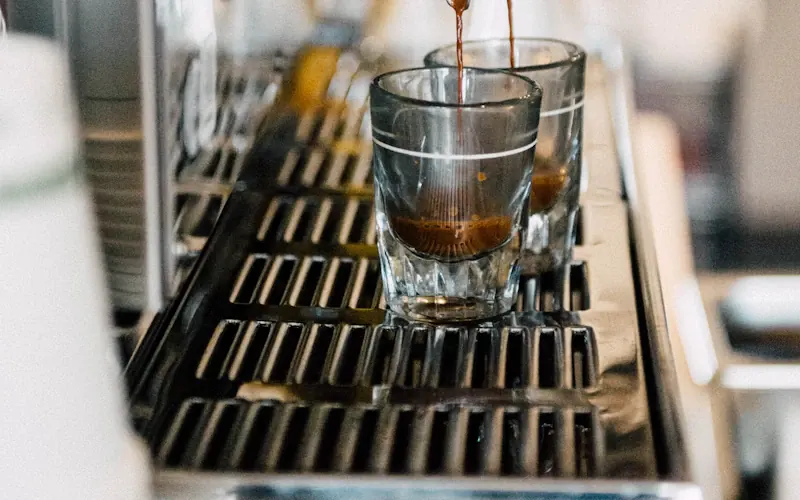
- Coffee in Italy is a codified social ritual as much as a drink, and the neighbourhood bar works as an economic institution and a marker of regional identity.
- The counter price of a caffè is free, not administered, and Italian law only requires the bar to display the counter tariff and the table tariff side by side.
- Italian espresso is listed neither by UNESCO nor on the EU register of traditional specialities guaranteed, despite repeated attempts.
In Italy, coffee isn't a drink, it's a codified social ritual, an economic institution, and a regional identity marker as powerful as the dialect or the cuisine. Understanding Italian espresso means accepting that the unwritten rules of the bar are often stricter than any written standard, and that breaking them doesn't go unnoticed. This guide documents those rules, their origins, their regional variations, and the history of the institution that attempted to formalise them: the INEI.
What makes the Italian bar a social institution rather than a coffee shop?
The Italian bar (simply "il bar," with no additional qualifier) is the functional equivalent of the Viennese café, the English pub, or the French bistro, but with a radically different economic and temporal logic. The Italian bar operates at industrial throughput: dozens to hundreds of espressos per hour during peak times (7-9am, 10-11am), served in under 30 seconds from order to cup.
This economic model explains everything. Contrary to a persistent belief, the price of a caffè al banco is not set by the Italian state: it has been free since price liberalisation, and it is neighbourhood competition that compresses it, to roughly 1.20 euros on average and 1.30 to 1.50 in the big northern cities. Table service, by contrast, ties up floor staff and slows turnover, which justifies a surcharge often close to double. That surcharge is entirely lawful provided it is disclosed, and the listino must show the counter column and the table column separately.
The Italian bar's conviviality is vertical, not horizontal: you stand, you cross paths, you exchange a few words with the barista who knows your face, you leave. The polar opposite of the Nordic or American coffee shop designed for laptop work sessions.
Which unwritten conventions govern ordering at an Italian counter?
Nine conventions shape how a coffee is ordered in an Italian bar. None of them is written down, none is enforced, and all of them shift with the region and the type of venue. They are observable habits, not laws.
- Order standing at the counter. That is the default position. Sitting is an exception you pay for.
- Cappuccino belongs to the morning. Hot milk is felt to sit heavily after a meal, so cappuccino stays culturally attached to breakfast. Later in the day, an Italian turns to a caffè, a macchiato caldo (espresso with a drop of steamed milk) or a marocchino. This is not a ban: the barista will serve you without comment, and simply register that you are not from around here.
- Sugar is powdered, not cubed. Powdered sugar dissolves instantly in a short espresso. Sugar cubes signal a French or Belgian café. Some historic bars even offer very fine-grain sugar specifically calibrated for the espresso cup.
- When you pay depends on the bar. Two long-standing customs coexist. In many places, Rome and Naples in particular, you go to the cassa first, take your scontrino and put it on the counter with your order. Elsewhere you drink and settle on the way out. Watching what the regulars do beats applying a single rule.
- Don't say "espresso", say "caffè." "Un caffè" means an espresso in Italy. "Espresso" is the international terminology adopted abroad. Asking for "un espresso" in a Roman or Neapolitan bar is understood but subtly foreign.
- Water accompanies coffee. A glass of water is often served with the espresso, to rinse the palate before drinking, not after. The order matters: water first cleans the mouth and lets you taste the coffee at full capacity.
- Nobody reheats an espresso. A lukewarm cup counts as lost. If yours has cooled, you waited too long, which is not supposed to happen in a bar that keeps moving.
- The barista has a say. In historic bars, the barista doesn't follow a rigidly standardised recipe, they adjust grind, dose, and tamping based on the weather (humidity), the day's beans, and the machine's current temperature. It's a transmitted craft, not a written protocol.
- The crema is the first thing judged. Italian customers look before they taste. The INEI specification describes it as fine, tight, hazelnut-coloured with tiger striping, and persistent for at least two minutes. It reads as a mark of good workmanship as much as a technical signal.
Why do Neapolitan roasters keep robusta in their blends?
Because robusta delivers exactly the cup Naples expects: dense, chocolatey, capped with a thick crema. Neapolitan tradition builds blends containing 20 to 50 percent robusta (Coffea canephora), while roasters in the north, in Trieste or Milan, lean towards arabica.
The preference is not a lack of refinement. It took shape across the twentieth century, as robusta entered world trade, around four logics:
- More crema. Robusta contains more suspended solids and lipids that favour the formation of a dense, persistent crema. In Neapolitan tradition, a thick crema is an essential visual quality marker.
- More caffeine. Robusta contains roughly twice the caffeine of Arabica. Neapolitan espresso is therefore more stimulating, a sought quality.
- Body and bitterness. Robusta delivers full body and clean bitterness that "holds up" to the generous sugar many Neapolitans add. A 100% light-roast Arabica would become too acidic and thin under that use.
- Economics. Robusta is less expensive than Arabica. Keeping an espresso at €1 while maintaining perceived quality requires careful blend management.
Naples also pushes the roast further than the north, and runs its machines gently enough that the dark roast does not turn into scorched bitterness. It is a coherent whole, a local taste, a blend and a way of running the bar, rather than an isolated recipe.
What does the INEI certified espresso specification actually prescribe?
The Istituto Nazionale Espresso Italiano was founded in Brescia in 1998, after three years of work, and publishes the Espresso Italiano Certificato specification. It is a voluntary industry standard, carried by some thirty roasters and machine and grinder makers, and not a state norm. Its parameters read as follows:
- Ground coffee dose: 7 g ±0.5 g, a traditional figure many baristas now exceed
- In-cup volume: 25 ml ±2.5 ml, crema included
- Water temperature at the group: 88°C ±2°C
- Coffee temperature in the cup: 67°C ±3°C
- Pressure: 9 bar ±1
- Percolation time: 25 seconds ±2.5
Then there is the heritage question, where a great deal of loose reporting circulates. Italian espresso is not inscribed on UNESCO's Representative List of the Intangible Cultural Heritage of Humanity. A single file, "Il caffè espresso italiano tra cultura, rituali, socialità e letteratura nelle comunità emblematiche da Venezia a Napoli", merged from two rival nominations, was indeed approved by Italy's agriculture ministry in January 2022. But the Italian National Commission for UNESCO set it aside at the end of March 2022 and put forward Italian opera for the following cycle. The file never reached Paris.
The same caution applies to the TSG label. Recognition of Italian espresso as a traditional speciality guaranteed at European level is a long-standing industry request, modelled on Neapolitan pizza. It has not resulted in a registration. A bar displaying a "certified espresso" logo is therefore claiming an industry mark, not European protection.
How do espresso habits shift from one Italian region to another?
They shift on three fronts: blend and roast, ordering vocabulary, and the repertoire of local drinks. Trieste, the old coffee port of Austria-Hungary, kept its own counter language, where a nero is an espresso in a cup, a capo a cappuccino and a capo in b the version served in a small glass. Piedmont produced the marocchino, first made at the Bar Carpano in Alessandria in the years after the Second World War, cocoa, espresso and foamed milk. Salento drinks caffè leccese, espresso poured over ice with almond milk, popularised by the Quarta roasting family in Lecce.
| City / Region | Espresso style | Typical blend | Local specificity |
|---|---|---|---|
| Naples | Very short, intense, bitter, sweetened | 50-60% Arabica / 40-50% Robusta, very dark roast | Thick crema, generous sugar, bar as daily social hub |
| Rome | Short, balanced, slightly bitter | 60-70% arabica, dark-medium roast | Freely priced like everywhere, held down by the sheer density of bars, often family-run across generations |
| Milan | Longer, less intense, arabica-dominant | 80-100% arabica, medium roast | Northern European influence, the city most open to specialty coffee |
| Trieste | Dense, fruity, complex | High-quality arabica, medium-dark roast | Historic coffee port, with an ordering vocabulary of its own: nero, capo, capo in b, goccia |
| Sicily | Short espresso, often served over ice in summer (caffè in ghiaccio) | Arabica and robusta, dark roast | Granita di caffè con panna as the summer speciality |
How did the third wave take root in the home country of espresso?
Slowly, and from the edges. Italy is where the third wave, light roasting, filter methods, bean traceability, took longest to gain ground, in the very country that invented the machine and the profession. The reasons are as much about identity as economics: touching traditional espresso means touching a heritage, and the floor price of a caffè al banco leaves little headroom for more expensive coffee.
Since 2018-2020, a specialty coffee scene has opened in Milan, Rome, Turin, and Florence, often run by young Italians who returned from London, Melbourne, or Copenhagen with new reference points. These bars offer V60, cold brew, single origins in light roast. They coexist with traditional bars without replacing them.
The tension is real but productive. The best Italian baristas in the specialty scene remain deeply rooted in the culture of the short espresso, fast service, and direct counter relationship, to which they add the technical rigour and grain traceability obsession that characterises the global third wave.
Italian espresso isn't a recipe. It's a relationship with time, the short time of the coffee drunk standing up, the long time of a culture passed from barista to barista for over a century. Understand that, and you understand why Italians look with benevolent incomprehension at the person ordering a "large oat milk cappuccino" after lunch.