☕ Key takeaways
- Honduras has become Central America's largest Arabica exporter, with mountainous regions (Marcala, Copán, Santa Bárbara) producing recognised specialty lots.
- Marcala is Central America's first coffee PDO (Protected Designation of Origin), guaranteeing precise geographic origin and minimum quality standards.
- Honduran coffees typically offer a sweet-fruity balance with tropical fruit and citrus notes, at a quality-to-price ratio that often outperforms better-known origins.
Honduran Coffee Guide: Marcala, Copán, Santa Bárbara
What should you know about Honduran coffee in three points?
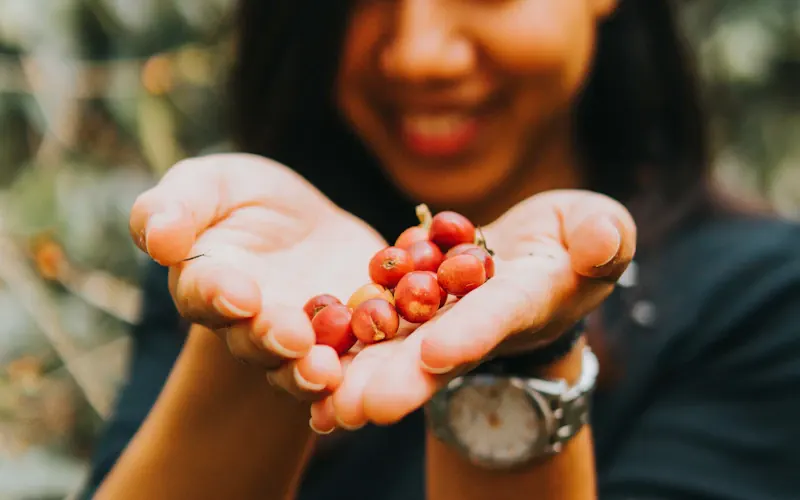
- Honduras is the largest coffee producer in Central America, ahead of Guatemala, Costa Rica and El Salvador, yet one of the least familiar origins to European specialty drinkers.
- Coffee reached Honduras in the early nineteenth century and only took off in the 1970s and 1980s, with a clear quality upgrade since the 2010s.
- A serious Honduran lot states its region, altitude, variety, processing and roast date; Belgian roasters who spotted the origin early often buy directly from cooperatives.
Honduras is the largest coffee producer in Central America, ahead of Guatemala, Costa Rica and El Salvador, yet it remains one of the least known specialty origins among European coffee enthusiasts. This paradox has historical roots: insufficient logistical infrastructure, a long absence of modern processing stations, and a reputation built on volume rather than quality. But from the 2010s onward, things have shifted decisively. The regions of Marcala, Copán and Santa Bárbara are now producing specialty lots that appear in top international competitions. This guide gives you the tools to understand this transformation and identify the Honduran coffees that deserve your attention.
How did Honduras become Central America's largest coffee producer?
Coffee was introduced to Honduras in the early nineteenth century but long remained in the shadow of neighbouring Guatemala and Costa Rica. Production truly took off in the 1970s and 1980s, driven by favourable agricultural policies and a climate well-suited to arabica in the country's western and central mountain zones. Since the early 2010s Honduras has been Central America's top coffee producer, a position it has held since. The USDA agricultural attaché puts the 2025/26 crop at 5.8 million 60 kg bags. For a long time, Honduras exported mainly commercial-grade coffee, often folded into blends with no origin mention. The specialty movement changed that equation. IHCAFE (the Honduran Coffee Institute) invested in producer training, modern micro-processing station construction and origin promotion on international markets. The creation of the Marcala protected designation of origin in 2005, Central America's first coffee PDO, marked a pivotal moment in the country's quality upgrading strategy.
Where is coffee grown in Honduras, and at what altitudes?
The best Honduran coffee zones are concentrated in the western and west-central departments: Copán, Ocotepeque, Lempira, Santa Bárbara, La Paz and Intibucá. These mountainous areas, crossed by ranges of moderate altitude compared to the Andes or Guatemalan volcanoes, nonetheless reach 1,200 to 1,800 m on the best plots. Honduras's subtropical humid climate in the coffee zones features a well-defined rainy season (May to October) and a dry season that facilitates harvesting and drying (November to March). Soils are generally well-drained and organically rich at altitude, providing a favourable base for arabica quality.
What does the Marcala PDO guarantee?
Marcala, in the La Paz department, is Honduras's official quality showcase and Central America's first coffee protected designation of origin. The PDO created in 2005 covers a delimited zone around Marcala, with strict quality and traceability requirements. To carry the Marcala PDO label, a coffee must be arabica, grown in the designated zone, respect precise processing standards and achieve a minimum quality score at cupping. Marcala coffees are characterised by full to medium body, frank and well-defined acidity, notes of caramel, stone fruit (peach, apricot) and occasional milk chocolate. The finish is pleasant. This classic but well-executed profile explains Marcala's international success: it appeals across a wide spectrum of palates, from the curious newcomer to the experienced taster.
What does a Copán coffee taste like?
The Copán department in far-western Honduras, at the Guatemalan border, is better known internationally for its Maya ruins than its coffee. Yet the plantations spread across the mountains around Santa Rosa de Copán, at roughly 1,200 to 1,600 m, produce coffees of great softness and balance. The Copán profile is generally gentler than Marcala: softer, less acidic, with notes of hazelnut, honey, vanilla and light yellow fruit. It is an excellent option for those who prefer a coffee without sharp edges, easy to appreciate across diverse brewing methods. The region is also building a network of small producers organised in cooperatives who are steadily gaining visibility on European specialty markets.
Why is Santa Bárbara drawing specialty roasters' attention?
Santa Bárbara is currently the Honduran region drawing the most attention in specialty coffee circles. The most interesting plots sit at 1,400 to 1,800 m in the Santa Bárbara mountain range, with a cool, misty microclimate that recalls the best zones of neighbouring Huehuetenango in Guatemala. Santa Bárbara coffees often show a more floral profile than other Honduran regions: white flower notes, fine citrus (bergamot, lime), bright acidity and light to medium body. This is a region producing some of Honduras's most exciting cups, particularly for specialty roasters seeking freshness and elegance rather than body and sweetness.
Which arabica varieties are grown in Honduras?
| Region | Dominant varieties | Main processing | Cup profile |
|---|---|---|---|
| Marcala PDO | Bourbon, Caturra, Catuaí | Washed | Body, caramel, stone fruit, frank acidity |
| Copán | Catuaí, Bourbon, IHCAFE 90 | Washed, some honey | Soft, hazelnut, honey, balanced |
| Santa Bárbara | Bourbon, Typica, Pacas | Washed, honey developing | Floral, fine citrus, bright acidity |
| Ocotepeque | Caturra, Catuaí | Washed | Chocolate, medium body, reliable |
The Pacas variety, an arabica endemic to El Salvador but present in several Central American border zones, grows in parts of Honduras with interesting results. The IHCAFE 90 variety, developed locally by the Honduran Coffee Institute, is rust-resistant, a significant asset in a country where this disease devastated plantations between 2012 and 2014, and where climate change continues to heighten that risk.
What still holds Honduran specialty coffee back?
Honduras is still mid-transition toward specialty maturity, and several obstacles persist: insufficient road infrastructure in the most isolated zones, water access difficulties for washed processing in some drier regions, and a lack of European market profile that forces producers to accept prices below their actual quality level. Orange rust, aggravated by climate change, remains a chronic threat. But the opportunities are real: purchase prices for Honduran specialty coffee are still lower than those of a comparable-quality Guatemala or Costa Rica. This represents genuine value for European roasters and consumers who pay attention. And the dynamic is positive: more and more Honduran producers are investing in modern processing equipment and accessing specialty markets directly through specialised exporters.
How do you recognise a quality Honduran coffee when buying?
As with all developing-quality origins, traceability is the primary buying criterion. A serious Honduran specialty coffee must indicate at minimum: the region (Marcala, Copán, Santa Bárbara), altitude, variety if possible, processing method and roast date. The Marcala PDO mention provides institutional assurance, but other regions can produce equally outstanding lots without that designation. Belgian specialty roasters who include Honduras in their catalogue tend to be early adopters: they spotted the origin before it became trendy and work with specific producers or cooperatives.
Honduras offers today's best value-for-quality ratio in Central American specialty coffee. The discoverers who found it a decade ago were right. Those discovering it now still have a window before prices catch up with quality.
Why does Honduras's reputation still lag behind its cup quality?
Honduras reached the top of the Central American production ranking recently enough that buyer perception has not caught up: the country was a minor player in the regional hierarchy in the early 1990s. That rise reflects both the expansion of coffee cultivation into new regions and a deliberate quality upgrade programme that has positioned Honduran specialty as a credible alternative to Guatemala and Costa Rica in the international market.
The quality improvement journey began seriously in the 2000s with investment in wet mills, raised drying beds and agronomic support programmes, funded partly by development agencies and partly by specialty buyers. The altitude profile of western Honduras is legitimately impressive: Marcala, Copán and Santa Bárbara all have farming zones above 1,200 metres, with the best plots reaching 1,800 metres. This altitude creates the conditions for slow cherry ripening and sugar concentration that speciality buyers associate with quality potential.
IHCAFE, the Honduran Coffee Institute, has played a significant role in this quality journey by providing varietal trials, technical training, and international market access support to small producers. The establishment of geographical indications and quality designations for specific Honduran regions has provided producers with a framework for differentiating their output from commodity production, a necessary infrastructure for participating in the specialty market rather than the commodity price pool. Several Honduran cooperatives have developed direct relationships with European and North American specialty roasters that provide the economic foundation for sustained quality investment.
The gap between Honduras's quality potential and its international recognition remains larger than it should be, a perception lag that creates genuine opportunity for buyers willing to research beyond established origin narratives. A well-sourced Honduran lot from Copán or Marcala often costs less than a Guatemalan Huehuetenango of similar cup quality, because origin reputation weighs on price more than the cup does. For price-conscious specialty buyers, Honduras represents the market inefficiency that attentive sourcing can exploit.
How do Marcala, Copán and Santa Bárbara compare in the cup?
Honduras's three best-known specialty regions each contribute distinct characteristics that experienced tasters can distinguish, though the differences are less dramatic than the contrast between, say, Ethiopian and Colombian coffees. The regional variation in Honduras is more subtle, a difference in emphasis within a broadly consistent origin profile, but meaningful for buyers seeking specific flavour targets.
Marcala, the first Honduran coffee to receive a geographical indication, is grown in La Paz department. The profile is typically clean and balanced: moderate citric acidity, medium body, notes of caramel and stone fruit. Marcala coffees are reliable performers for espresso blending and as accessible single-origin filter options. The designation gives producers a reputational incentive to keep quality steady, which favours consistent lots.
Copán, in western Honduras near the Guatemalan border, produces soft, balanced coffees with hazelnut, honey and light yellow fruit, gentler than Marcala. That easy-drinking profile makes Copán a good first Honduran lot for buyers building regional understanding. Some Copán producers have developed honey-processing capabilities that add fruit notes to the base chocolate profile, creating more complex cup options at small-scale volume.
Santa Bárbara, with plots reaching 1,800 m, is where many of the country's most talked-about specialty lots come from. Its cool, misty microclimate slows cherry ripening, and the best lots show bright citric acidity, white flower notes and a clean, extended finish. For buyers who want to see how high Honduras can go in the cup, Santa Bárbara is the reference.