☕ Key takeaways
- Swiss Water Process removes 99.9% of caffeine using only water and activated charcoal filters, with no chemical solvent. That is why specialty roasters treat it as the reference.
- Supercritical CO₂ keeps the most aroma. It also costs the most, so it mostly shows up in premium decafs.
- A 'natural' label on ethyl acetate decaf (made from sugar cane) still describes a chemical solvent, and it tells you little about how gentle the process was on flavour.
Decaf Coffee Guide: Swiss Water, CO₂, Ethyl Acetate Methods
What should you know before buying decaf coffee?
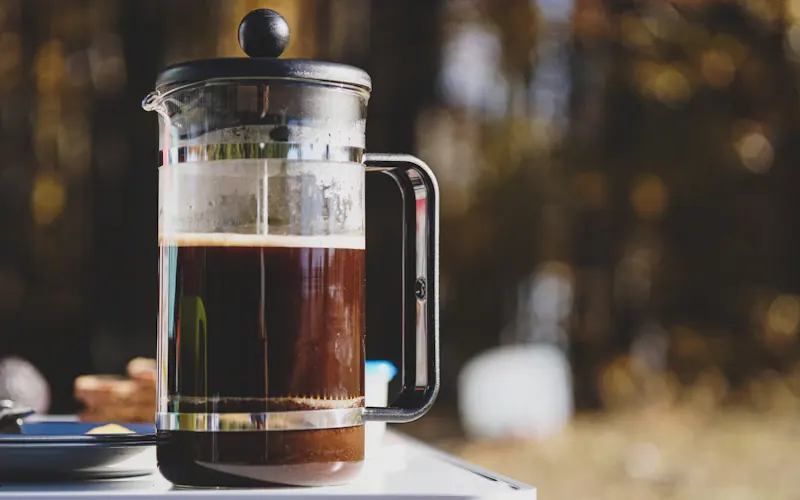
- Decaf has an unfair reputation: with a good method and good green coffee, it is no longer a second-tier product.
- Four process families matter: water-based (Swiss Water, Mountain Water), supercritical CO₂ and ethyl acetate.
- Freshness rules still apply: buy whole beans, grind just before brewing and check the roast date.
Decaf has an unfair reputation. For decades it meant compromise: chemical-smelling, flavour-stripped coffee for people who couldn't handle caffeine. That image is outdated. Decaffeination technology has advanced considerably, and today's best methods produce decafs that genuinely preserve the aromatic complexity of the origin coffee. Some specialty roasters now offer decafs that seriously rival their caffeinated lineup. This guide explains the four main decaffeination methods, their effects on flavour, and how to buy a quality decaf.
Why does the decaffeination method change how coffee tastes?
Caffeine is a molecule that is both water-soluble (hydrophilic) and partially fat-soluble (lipophilic). To remove it, you need a solvent or medium that captures it selectively, without carrying away the other flavour-active compounds, chlorogenic acids, lipids, sugars, amino acids, that form the coffee's taste profile. That's the challenge: no method removes caffeine with perfect selectivity. Every process has secondary effects on the bean's chemical composition, and therefore on its flavour after roasting.
The key for the buyer is understanding which method best preserves origin characteristics, and choosing based on priorities: flavour purity, organic certification, environmental impact, or price-to-quality ratio.
How does the Swiss Water Process decaffeinate coffee without solvents?
The Swiss Water Process (SWP) is the best-known and most valued decaffeination method in the specialty coffee world. Developed in Switzerland in the 1930s and commercialised industrially since 1988 by a Canadian company, it uses no chemical solvents.
MechanismGreen beans are immersed in "flavour-charged water" (Green Coffee Extract, GCE), an aqueous solution already saturated with coffee's soluble compounds (except caffeine, which has been removed by activated carbon filtration). Because this water is already saturated with flavour compounds, only caffeine migrates from the bean into the water. The extracted caffeine is then eliminated by passing through activated charcoal filters, and the GCE is recycled in a continuous cycle.
Flavour impactSWP preserves flavour compounds well, but the repeated aqueous process tends to round out acidities and slightly reduce body. Swiss Water-processed coffees often have a softer, less angular profile, sometimes slightly less expressive than their caffeinated counterparts. This is acceptable, and often transparent to a non-expert consumer.
Organic certificationSWP is certifiable organic, making it the preferred method for roasters positioned in bio and artisan markets.
What is supercritical CO₂ decaffeination?
CO₂ decaffeination is the method that best preserves the original flavour profile. It is also the most expensive, which is why it's reserved for the highest quality coffees.
MechanismCO₂ is brought to a supercritical state (above 31.1°C and 73.8 bar of pressure), an intermediate state between liquid and gas where it acquires remarkable chemical selectivity. In this state, supercritical CO₂ dissolves caffeine with very high selectivity, without affecting the higher-molecular-weight flavour compounds.
Flavour impactThis method produces the decaf closest to the original caffeinated coffee. Acidities are preserved, body is maintained, origin notes are readable. Specialty roasters who want to offer a top-tier decaf choose supercritical CO₂ almost universally.
LimitationEquipment and process costs are reflected in the final price. It is the most expensive of the main methods.
Natural or synthetic ethyl acetate: what is the difference for decaf?
Ethyl acetate (EA) is an ester naturally present in many fruits, sugarcane, and fermented molasses. It's the compound responsible for the aroma of certain fruity wines. Its use for decaffeination is long-established, but its reputation is mixed, because there are two fundamentally different sources of ethyl acetate.
Natural ethyl acetateDerived from sugarcane or sugar beet, produced by fermentation or natural extraction. Coffees decaffeinated with this source are sometimes called "sugarcane decaf" or "natural EA." This process is used notably in Colombia for specialty coffees. It leaves a very slight sweetish note, almost fruity, appreciated by some enthusiasts.
Synthetic ethyl acetateProduced petrochemically (reaction between acetic acid and fossil-derived ethanol), it is chemically identical but of non-natural origin. This is the most common industrial form for its low cost. If a label simply reads "ethyl acetate" without specifying the source, it is almost certainly the synthetic version.
Flavour impactEA tends to leave a slight residual sweetness. In its natural (sugarcane) version, this can be a flavour advantage. In its synthetic industrial version, the impact on profile is more variable and less predictable.
How does the Mountain Water Process differ from the Swiss Water Process?
The Mountain Water Process (MWP) is a method developed and patented in Mexico by Descamex. It operates on the same principle as Swiss Water Process, using pure mountain water (glacial water from Mexican volcanoes) and activated charcoal filters to remove caffeine.
Differences from SWPThe quality of the spring water source is the key marketing argument. In practice, flavour differences from SWP are subtle and difficult to perceive without side-by-side testing. MWP is certifiable organic and is often chosen for Central American and Mexican coffees, giving it geographic and narrative coherence.
Which decaffeination methods should you compare before buying?
| Method | Solvent used | Flavour preservation | Organic certifiable | Relative cost | Typical use |
|---|---|---|---|---|---|
| Swiss Water (SWP) | Water + activated charcoal | Good (slight acidity loss) | Yes | Medium | Specialty, organic, mainstream |
| Supercritical CO₂ | CO₂ under pressure | Excellent | Yes | High | High-end specialty |
| Natural EA (sugarcane) | Natural ethyl acetate | Good (slight sweet note) | To verify | Medium-high | Specialty, Colombia |
| Synthetic EA | Petrochemical ethyl acetate | Variable | No | Low | Industrial, mass market |
| Mountain Water (MWP) | Water + activated charcoal | Good (similar to SWP) | Yes | Medium | Specialty, Central America |
| Methylene chloride (DCM) | Chemical solvent | Acceptable | No | Low | Industrial (avoid) |
Find on Amazon
Affiliate links: as an Amazon Associate, expertcafe.be earns from qualifying purchases, at no extra cost to you. Learn more.
Should you avoid decaf coffee made with methylene chloride?
Dichloromethane (DCM or methylene chloride) is a chemical solvent still used industrially for cheap decaffeination. Its use in the EU is legal, subject to strict residue limits (max 2 ppm in roasted coffee). But from a conscious consumer standpoint, this method should be avoided: significant environmental impact, possible trace residues (even low), and the flavour profile of DCM-treated coffees is generally inferior to alternatives. Specialty roasters generally avoid it.
How can you recognise a quality decaf when buying?
A serious label or product page should tell you: the decaffeination method clearly identified, the origin of the green coffee (country, region, farm), the roast date, and tasting notes. If this information is absent or vague, the likelihood of it being an industrially processed decaf (synthetic EA or DCM) is high.
A well-processed specialty decaf (CO₂ or SWP) deserves the same attention as an equivalent caffeinated coffee. The same freshness logic applies: even decaffeinated, coffee loses aromatics over time after roasting. Buy whole beans, grind just before brewing, check the roast date.
Belgian specialty roasters occasionally offer Swiss Water or CO₂ decafs of impeccable quality. A good decaf is simply a good coffee from which caffeine has been carefully removed, not a second-tier product. Look for explicit method labelling (CO₂, SWP, MC) and a clear roast date on the bag.