Clever Dripper Brew Guide: Immersion Steeping and Valve Filtration
Quick answer: a Clever Dripper is a paper-filter cone with a valve in its base. While it sits flat the valve stays shut and the coffee steeps in full immersion, like a French press; when you set it on a cup the valve opens and the brew drains through the paper. That gives you the forgiveness of steeping and the clean cup of a filter, with no pouring technique to learn. Start with 20 g of medium-ground coffee, 340 g of water at 95 °C, steep for 2 minutes, then drain for 1 to 2 minutes.
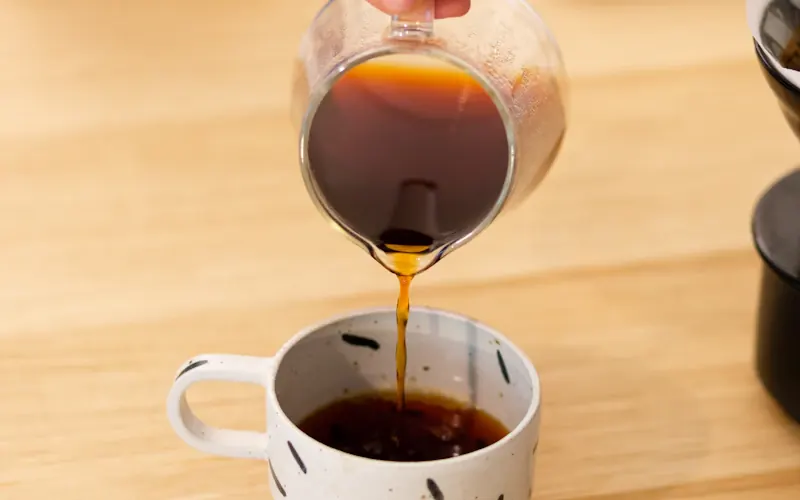
- Taiwanese company Abid launched the Clever in 2008; it comes in 300 ml (No. 2 filters) and 500 ml (No. 4 filters) sizes.
- Four published recipes, from Square Mile to the maker's own, land on almost exactly 60 g of coffee per litre of water.
- The valve only opens when the dripper sits on a cup or carafe, so you decide when steeping ends.
- Grind is your one big dial: drains in under a minute and tastes thin means finer; takes over two minutes and tastes harsh means coarser.
- The SCA home-brewer standard asks for 55 g/L, a slurry at 90 to 96 °C and a strength of 1.15 to 1.55% TDS.
What a Clever Dripper actually is
It looks like a toy: a clear plastic cone, a lid, a silicone stopper. It is also one of the cleverly simple designs in coffee. Abid, a Taiwanese company, launched it in 2008, and Sweet Maria's began distributing it in the United States in 2009. The body is Eastman Tritan, a BPA-free copolyester that resists clouding and cracking.
Two sizes are sold. The small one holds 300 ml and takes No. 2 cone filters; the large one has a practical capacity of 500 ml and takes No. 4, which Sweet Maria's calls the preferred size. The large model will also accept a No. 2, but the No. 4 fits its walls exactly. If you are choosing between brewers, the French press, V60 and AeroPress guides cover the neighbours.
Why steeping first and filtering second works
In a pour-over, the water passes through the bed once and every pour changes the result. In a Clever, all the coffee sits in the same water for the same time, so grind, ratio and time do nearly all the work. Brian's Coffee Spot documents an updated method crediting James Hoffmann: one single pour, no separate bloom, a two-minute steep. If you can stir and watch a timer, you can make it.
The second stage is what a French press cannot do. The paper traps fines and much of the oil, so the cup is cleaner and brighter. The trade-off is that fines can clog the paper and slow the drain, which is why grind matters so much. Our paper, metal and cloth filter comparison and the page on muddy French press coffee show what the paper is protecting you from.
What published Clever recipes have in common
Recipes look different on the surface and almost identical underneath. Divide coffee by water and you get the same number each time.
| Source | Coffee | Water | Temperature | Steep | Grams per litre |
|---|---|---|---|---|---|
| Square Mile Coffee Roasters | 24 g | 400 ml | not stated | 2 min | 60 |
| Ozone Coffee Roasters | 15 g | 250 g | 95 °C | 2:15 | 60 |
| Brian's Coffee Spot | 18 g | 300 ml | 92 °C | 2:00 after a 30 s bloom | 60 |
| CLEVER Brewing (maker) | 18.5 g | 310 g | 100 °C | drain opens at 1:10, done by 2:30 | 59.7 |
The SCA Standard 310-2021 for home brewers specifies 55 g/L, a slurry between 90 and 96 °C and a strength of 1.15 to 1.55%. Clever recipes therefore run a touch stronger than the standard. For water, the SCA target is 150 mg/L of dissolved solids within a 75 to 250 range and a pH of 6.5 to 7.5; the water guide and the ratio guide go further.
Step-by-step: steep, then drain
Stage 1: immersion
- Rinse the filter. Fold a No. 4 cone filter (500 ml model) or No. 2 (300 ml model) into the dripper, set it on your cup and run hot water through it. The valve opens on the cup, so the rinse drains straight away. Discard that water and stand the dripper flat on the scale; the valve closes again.
- Weigh and grind. Weigh 20 g of beans and grind to a medium setting, around the texture of granulated sugar, just before brewing. Tip the grounds into the filter, tap the side once to level the bed and zero the scale.
- Add all the water. Start the timer and pour 340 g of water at 95 °C in 20 to 30 seconds, wetting every particle. Give it three or four stirs to break up dry pockets, then put the lid on.
- Steep for 2 minutes. Keep the lid on to hold the heat. At 2:00 lift it and stir once, gently, to knock grounds off the paper and sink the crust. Lid back on.
Stage 2: valve filtration
- Set it on the cup. Place the dripper on your mug or carafe. The rim pushes the valve open and the coffee starts to run. The vessel's opening needs to be narrower than the dripper's base ring, otherwise nothing happens.
- Watch the drain. Most of the liquid should clear within about a minute, two at the outside. A flat, even bed of grounds at the end is the sign of an even extraction. If it crawls past 2 minutes, grind coarser next time.
- Lift off and stir. When the surface has gone and only drips remain, lift the dripper and rest it on a saucer; the valve closes and holds back the last drops. Swirl the cup once and drink. Total time: 3 to 4 minutes.
On your first brew keep every number as written. Change one thing next time, grind first. Writing down the drain time gives you a reliable reference from one session to the next.
Dialling it in by taste
| What you taste | Likely cause | Try this |
|---|---|---|
| Sharp, sour, thin | Under-extraction: grind too coarse or water too cool | One step finer, or 2 °C hotter, or 15 s longer |
| Bitter, drying | Over-extraction: grind too fine or steep too long | One step coarser, 2 °C cooler, or 15 s shorter |
| Drain takes over 2 minutes | Grind too fine, or paper clogged with fines | Coarsen the grind and stir more gently at the end |
| Drains instantly, watery cup | Grind too coarse | Go finer |
| Coffee leaks before you set it down | Dripper not flat, dirty valve or worn silicone | Rinse and reseat the valve, inspect the seal |
Brian's Coffee Spot gives the same rule in one line: if the coffee drains really quickly you have ground too coarse, and if it drains really slowly you have ground too fine. Check the grind size by method page to place your grinder setting.
Small habits that change the cup
- Rinse the paper every time. A pale cup shows off any papery taste.
- Check the cup you drain onto. A wide bowl keeps the valve closed and the steep quietly runs long.
- Do not park it. The valve holds the liquid, but the grounds keep extracting while they sit in it.
- Use the lid. Plastic is a poor insulator and 2 minutes is long enough to lose heat.
- Brew small batches in the big one. The 500 ml model also copes with small doses. For a full batch, stay a little under 500 ml, for instance 28 g with 470 g of water.
Clever Dripper questions, answered
How long should you steep coffee in a Clever Dripper?
About 2 minutes is the common answer: Square Mile and Brian's Coffee Spot both use 2 minutes, and Ozone waits until 2:15. Start at 2:00, then move in 15-second steps according to taste.
What grind size works best in a Clever Dripper?
Medium, similar to granulated sugar. Caffè Rernani puts it at roughly 500 to 700 microns. Use the drain time as feedback: much faster than a minute means too coarse, well beyond two minutes means too fine.
What is the difference between a Clever Dripper and a French press?
Both steep the coffee in immersion. The Clever then drains through a paper filter, which holds back sediment and fines, while a French press leaves more particles and oils in the cup, giving a heavier, cloudier result.
Which Clever Dripper size should I buy, 300 ml or 500 ml?
The 300 ml takes No. 2 filters and suits a single cup. The 500 ml, with a practical capacity of 500 ml and No. 4 filters, makes one to two cups and copes with small doses, so it is the more flexible choice.
Sources
Figures and recipes below were checked in October 2026 against these pages. The recipe in this guide is a starting point to adjust by taste, not a published standard.
- Sweet Maria's Coffee Library, All About The Clever Coffee Dripper : Tritan body, No. 4 or No. 6 filters, valve, US distribution since 2009
- Caffè Rernani, Clever: history and how to use it : Abid invention in 2008, 300 and 500 ml sizes, 500 to 700 micron grind
- Square Mile Coffee Roasters, Clever Dripper : 24 g to 400 ml, 2-minute steep
- Ozone Coffee Roasters, Clever Dripper Brew Guide : 15 g to 250 g at 95 °C, No. 2 and No. 4 filters
- Brian's Coffee Spot, Making Coffee at Home: Clever Dripper : 18 g to 300 ml, valve behaviour, drain tip
- CLEVER Brewing, product page : BPA-free Tritan, 500 ml capacity, made in Taiwan, maker's recipe
- SCA Standard 310-2021, Home Coffee Brewers : 55 g/L, 90 to 96 °C, strength 1.15 to 1.55%
- Third Wave Water, SCA water standard summary : 150 mg/L, range 75 to 250, pH 6.5 to 7.5
Further reading: French press guide · V60 guide · AeroPress guide · Grind size by method · Coffee-to-water ratios · Water and extraction · Specialty coffee FAQ