Burnt or Ashy Coffee: Causes and Fixes
A burnt or ashy taste in coffee comes mostly from too dark a roast, water that is too hot (above 96 C), over-extraction, or overheated and dirty equipment. Fix it in this order: switch to a lighter roast, lower the water temperature into the 90.6 to 96.1 C range, shorten the extraction, clean the equipment, and never leave coffee on a hot plate.
- Cause 1: a very dark, oily roast already carries carbonised notes that brewing cannot fix
- Cause 2: water above 96 C over-extracts bitter compounds; the target range is 90.6 to 96.1 C (195 to 205 F)
- Cause 3: over-extraction from too fine a grind or too long a contact time
- Cause 4: overheated group head, rancid residue, coffee left on the hot plate
- Tell the "burnt" defect apart from an intentional, balanced dark roast
Why does coffee taste burnt or ashy?
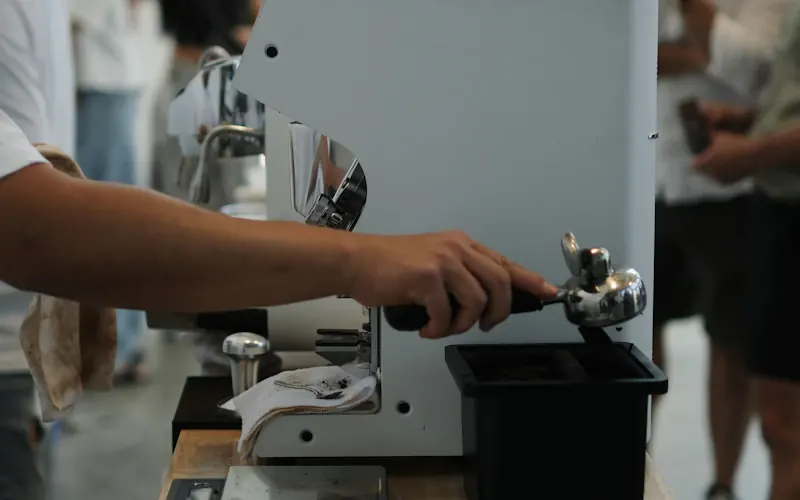
A burnt or ashy taste is a defect of excess bitterness, often paired with a mouth-drying astringency and a lingering sooty note. It almost always has a thermal or extraction origin. Here are the causes, in the order you should check them.
Too dark a roast
This is the most common and most underestimated cause. A roast pushed too far, especially oily, very dark beans, develops carbonised compounds (pyrazines and pyrolysis phenols) that dominate the cup. This character is intrinsic to the bean: no brewing adjustment removes it. If the beans look oily and glossy black, the defect probably starts here.
Water that is too hot
Above 96 C, and especially at a full 100 C boil, water extracts bitter compounds too quickly and tastes burnt. The Specialty Coffee Association recommends water between 90.6 and 96.1 C (195 to 205 F). A kettle that pours straight-off-the-boil water is a classic cause of burnt coffee.
Over-extraction
When you pull too much material out of the coffee, the last compounds to dissolve are bitter, astringent tannins. Too fine a grind, too low a dose or too long a contact time push extraction past the balance point and produce that ashy taste. It is common in espresso when the flow runs too slowly.
An overheated group head
On an espresso machine, a group head or boiler that runs too hot (often from an over-set temperature or no cooling between shots) cooks the coffee during brewing. The classic symptom: the first cups of the day are fine, then the coffee turns bitter after several back-to-back shots.
Rancid residue
Coffee oils oxidise and turn rancid in the portafilter, group head, basket and grinder burrs. These rancid deposits leave an ashy, bitter note on every cup, even with fresh, quality coffee. Never-cleaned equipment is a silent but very common cause.
Coffee left on a hot plate
On a classic drip machine, the hot plate keeps coffee warm but keeps cooking it. After 15 to 20 minutes the coffee caramelises then scorches in the carafe. The taste turns bitter, flat and ashy, even if the original brew was perfect.
How do you fix burnt-tasting coffee, step by step?
Work through these in order. Each step isolates one cause; stop as soon as the defect disappears.
- Switch to a lighter roast. Replace an oily dark roast with a medium or medium-dark roast that is dry on the surface. This is the most effective fix when the defect is intrinsic to the bean.
- Lower the water temperature. Aim for 90.6 to 96.1 C (195 to 205 F). Without a variable-temperature kettle, let boiled water rest 30 to 45 seconds before pouring.
- Shorten the extraction. Adjust dose or time: for espresso, aim for 25 to 30 seconds for about 36 g in the cup; for filter, stay under 4 minutes and coarsen the grind slightly if the brew runs too slowly.
- Clean the equipment. Backflush the espresso machine, degrease the portafilter and basket, brush the grinder burrs, and flush the group head with hot water before extracting.
- Avoid the hot plate. Move the coffee to an insulated carafe as soon as brewing ends. Never let it cook for more than 15 to 20 minutes on a hot plate.
Which burnt-coffee symptom points to which cause?
| Symptom | Likely cause | Fix |
|---|---|---|
| Carbonised bitterness across every method | Too dark a roast | Choose a medium roast, dry on the surface |
| Sharp, astringent burnt taste | Water too hot (above 96 C) | Lower into the 90.6 to 96.1 C range |
| Ashy note, dry mouth, coffee too strong | Over-extraction (too fine, too long) | Coarsen the grind, shorten the extraction |
| Bitterness that worsens cup after cup | Overheated group head or boiler | Flush, let cool between shots |
| Constant rancid, ashy note | Rancid oil residue | Backflush, clean basket and burrs |
| Flat, burnt coffee after sitting | Coffee left on a hot plate | Insulated carafe, never beyond 15 to 20 min |
What separates a burnt defect from an intentional dark roast?
Not every dark coffee is burnt. An intentional dark roast, such as an Italian-style espresso blend, stays balanced: clean if firm bitterness, full body, notes of cocoa, dark caramel or toast, with no unpleasant sharpness. It is a profile choice, not a defect.
Genuinely burnt coffee, by contrast, shows aggressive bitterness, a mouth-drying astringency and a sooty or ashy note that lingers long after the sip. The simple test: change your water and extraction. If the defect disappears, brewing was at fault; if it persists identically across every method, the roast is pushed too far.
Frequently asked questions
Why does my coffee taste burnt even though I didn't overheat it?
A burnt taste does not only come from heating. In most cases it comes from too dark a roast, water that is too hot above 96 C, over-extraction (too fine a grind or too long a contact time) or rancid residue in the machine. Check your roast and water temperature first: these are the two most common causes.
What is the right water temperature to avoid a burnt taste?
The Specialty Coffee Association recommends water between 90.6 and 96.1 C (195 to 205 F). Above 96 C, the extraction of bitter compounds speeds up and produces a burnt taste. If you have no variable-temperature kettle, let boiled water rest 30 to 45 seconds before pouring.
How do I tell genuinely burnt coffee from an intentional dark roast?
An intentional dark roast stays balanced: clean bitterness, full body, cocoa or toast notes, with no unpleasant sharpness. Burnt coffee shows aggressive bitterness, a mouth-drying astringency and a lingering ashy note. If the defect disappears when you change water or extraction, it is a brewing problem; if it persists across every method, the roast itself is the cause.
Can dirty equipment really cause an ashy taste?
Yes. Coffee oils oxidise and turn rancid in the portafilter, group head and grinder burrs. These rancid deposits leave an ashy, bitter note on every cup, even with quality coffee. Regular cleaning (a weekly backflush and brushing the burrs) often removes the defect on its own.
Read more: All guides · Specialty coffee FAQ · Coffee glossary