Best Moka Pots 2026: Aluminium vs Stainless and Induction Compared
- The big decision is aluminium (classic, cheap, no induction) versus stainless steel (durable, dishwasher safe, induction)
- Timeless classic: Bialetti Moka Express (~30 EUR), the reference moka taste on gas
- Smart budget pick: aluminium Grosche Milano (~35 EUR), Italian-certified safety valve, 3-cup to 12-cup sizes
- More crema: Bialetti Brikka (~55 EUR in 4-cup) thanks to its silicone valve holding back the pressure (aluminium, no induction)
- Induction: Bialetti New Venus stainless (~45 EUR) or the design icon Alessi 9090 in 6-cup (150 to 195 EUR)
- Aluminium will not work on induction without a ferromagnetic adapter disc
- The boiler works at roughly 1 to 2 bar, and the safety valve vents once pressure climbs past that working range
Which moka pot should you pick in 2026, aluminium or stainless?
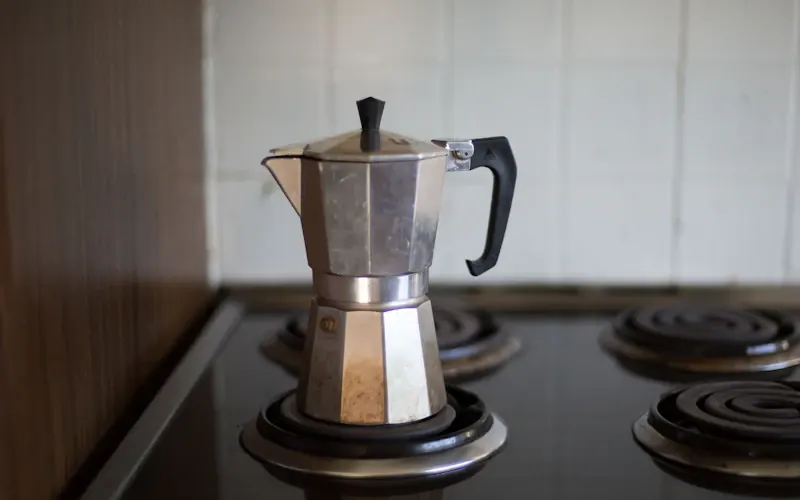
Start with the hob, not the price: the aluminium Moka Express on gas, the stainless New Venus or Alessi 9090 on induction, the Brikka when crema matters more than anything else. The moka pot, whether aluminium or stainless and built for gas or induction, was invented by Alfonso Bialetti in 1933 and has barely changed in nearly a century. Steam generated in the boiler pushes near-boiling water up through the grounds at roughly 1 to 2 bar, producing an intense cup that sits between filter coffee and espresso. Two parts decide the outcome as much as the coffee does: the alloy of the body, which sets how fast it heats and which hobs it will work on, and the gasket-and-valve pair, which sets how much pressure builds before the coffee rises. Here is our 2026 selection, from the affordable classic to the induction-ready stainless design.
| Model | Material | Induction | Cups | Indicative price | Best for | Buy |
|---|---|---|---|---|---|---|
| Bialetti Moka Express | Aluminium | No | 6 | ~30 EUR | The Italian classic, gas and electric | Check price on Amazon |
| Grosche Milano | Aluminium | No | 3 to 12 | ~35 EUR | Budget pick, certified safety valve | Check price on Amazon |
| Bialetti Brikka | Aluminium | No | 2 or 4 | ~55 EUR | Thicker crema, silicone valve | Check price on Amazon |
| Bialetti New Venus | Stainless steel | Yes | 6 | ~45 EUR | Best value for induction | Check price on Amazon |
| Alessi 9090 | Stainless steel | Yes | 6 | 150 to 195 EUR | Iconic design, induction, built to last | Check price on Amazon |
Ballpark figures collected from European retailers (Bialetti, Alessi and Grosche official sites, price comparison engines) in September 2026; they move with size, colour and promotions. Materials, capacities and induction compatibility taken from the manufacturer spec sheets.
* These links may earn a commission if you make a purchase, at no extra cost to you. Learn more.
The classic: Bialetti Moka Express
The aluminium Moka Express is the best-selling moka pot in the world, instantly recognisable by the octagonal shape designed to spread heat evenly. It delivers the traditional moka taste, round and full-bodied, for a token price of around 30 euros in the 6-cup size. Its only real drawback is the aluminium itself: not dishwasher safe and not induction compatible, and best rinsed with plain hot water without detergent to preserve the seasoned interior.
Value for money: Grosche Milano
The Grosche Milano reworks the classic aluminium formula with a tidy finish and an Italian-certified safety valve, for around 35 euros. Grosche lists it from three to twelve cups, which makes it handy for solo drinkers and families alike. Like any aluminium pot, the Milano is not induction compatible without an adapter disc; the brand answers that with the Milano Induction and Milano Steel versions, whose ferromagnetic base grips the hob.
More crema: Bialetti Brikka
The Brikka is set apart by a silicone valve on the column, which holds the coffee back until enough pressure has built underneath it. The result is a thicker crema, closer to an espresso, which other moka pots simply do not produce. Bialetti sells it in 2-cup and 4-cup sizes; expect around 55 euros for the 4-cup. The body remains aluminium, so gas, electric or an adapter plate.
Induction and durability: Bialetti New Venus and Alessi 9090
For an induction hob the body must be made of ferromagnetic stainless steel. The Bialetti New Venus (around 45 euros in the 6-cup size, now sold by Bialetti simply as the Venus) is the sweet spot: 18/10 stainless, compatible with all hobs including induction, and dishwasher safe. The Alessi 9090, designed by Richard Sapper in 1979 and taken into the collection of the MoMA in New York, is the premium design option: mirror-polished 18/10 stainless, a widened magnetic base that pulls heat off the hob, and a lifespan measured in decades. Budget 150 to 195 euros for the 6-cup, depending on the retailer.
Why won't an aluminium pot heat on an induction hob?
Because an induction hob does not heat the pot, it induces a current in it, and that only works with a metal the magnetic field can grab. Aluminium is not ferromagnetic, so the field passes through and nothing happens: the pot sits there cold while the hob reports no pan. Stainless steel with a magnetic grade, or a steel disc under the pot, restores the coupling.
The material is the most decisive choice for the rest, too. Aluminium heats quickly, costs little and delivers the historic moka taste prized by purists. In return it oxidises when exposed to detergents, is not dishwasher safe and, crucially, is not ferromagnetic, so it will not work on an induction hob.
Stainless steel costs more but solves all of that: it does not oxidise, it is dishwasher safe, it lasts longer and it heats on every source, gas, ceramic, electric and induction. The taste shifts slightly, often described as a touch cleaner and brighter than aluminium, a subtle difference most drinkers will not notice once the coffee is brewed correctly.
If you want an aluminium pot but cook on induction, you have two options: use a ferromagnetic adapter disc placed between the pot and the hob, or simply choose a stainless model from the start. The adapter works, but it heats more slowly and gives you less precise temperature control than a stainless body built for induction.
What does the safety valve do when the basket clogs?
It vents. The small valve set into the boiler wall opens as soon as pressure climbs past the normal working range of 1 to 2 bar, releasing steam sideways rather than letting it keep building behind a blocked filter. That is why you never fill the boiler above it, and why a valve crusted with scale is the one part worth checking before every brew.
Heat source: this is the first filter. On gas or standard electric, aluminium is fine. On induction, you need induction-ready stainless steel or an adapter disc.
Number of cups: a moka pot must be used at its rated capacity to work well. A 6-cup pot half filled will extract poorly. Choose the size that matches your real daily consumption, even if that means owning two.
Safety valve: every good pot has one, and normal brewing sits below its opening point. Make sure it stays free and clean with every use, and never fill the boiler past its line.
Gasket: the rubber or silicone ring between boiler and jug is what holds the pressure. Once it hardens or splits, steam escapes sideways and the coffee barely rises. Plan on a replacement every six to twelve months with daily use.
Maintenance: stainless is dishwasher safe, aluminium is not. For aluminium, rinse with hot water and no soap and dry thoroughly to prevent oxidation and off-flavours.
Crema: only back-pressure versions like the Brikka, whose silicone flap holds the coffee back until a threshold is reached, produce a thick foam. Classic moka pots make coffee with no true crema, which is normal and not a fault.
When exactly do you take the pot off the heat?
At the first gurgle, not after it. The stream turns pale and starts to sputter when the boiler runs out of liquid water and pushes steam through the bed instead, and that steam is what drags out the scorched, bitter notes. Pull the pot then, and run a trickle of cold water under the base to stop it dead.
- Hot water in the boiler: fill the lower chamber with already-hot water up to the safety valve, never above it. Starting hot shortens the coffee's exposure to heat and reduces bitterness.
- Medium-fine grind: use a grind close to fine table salt, coarser than espresso. Fill the funnel basket level and smooth the surface with a finger.
- Do not tamp: never press the coffee into the basket. Steam must pass freely through the grounds, otherwise pressure builds too high and the coffee scorches.
- Low to medium heat: screw the two halves together and set on low to medium heat. Too high a flame burns the coffee and turns it bitter.
- Stop at the right moment: as soon as the coffee rises and you hear the characteristic gurgle, remove from the heat. A trickle of cold water under the base stops extraction instantly.
- Stir and serve: stir the coffee in the upper chamber to even it out, then serve straight away.
What ruins a moka pot brew most often?
- Tamping the coffee: this is the number one cause of bitter coffee and excessive pressure. Fill level, do not press.
- Too fine a grind: it clogs the basket, trips the valve and tastes scorched. Aim for medium-fine, not espresso.
- Too high a heat: the moka pot is a low-to-medium-heat device. Excess heat over-extracts and burns the aromas.
- Putting aluminium in the dishwasher: detergents oxidise it and spoil the taste. Rinse with hot water and dry.
- Using aluminium on induction without an adapter: it simply will not heat. Choose stainless or a ferromagnetic disc.
- Running a large pot half full: the rated capacity must be respected for correct extraction.
Frequently asked questions about moka pots
What is the best moka pot in 2026?
The benchmark is still the aluminium Bialetti Moka Express (around 30 euros) for the classic taste on gas. On induction, the stainless Bialetti New Venus (around 45 euros) is the best value, and the 6-cup Alessi 9090 (150 to 195 euros depending on the retailer) the design choice. For more crema, the Bialetti Brikka and its silicone valve (around 55 euros in 4-cup) stand out, but the body is aluminium and will not grip an induction hob.
Does an aluminium moka pot work on induction?
No, aluminium is not ferromagnetic. Aluminium pots such as the Moka Express, the Brikka and the aluminium Grosche Milano do not work on induction. You need either an induction-compatible stainless pot (Bialetti New Venus, Alessi 9090, Grosche Milano Steel) or a ferromagnetic adapter disc placed between the pot and the hob; Bialetti makes a stainless one for its 1-cup to 9-cup range.
What grind size for a moka pot?
A medium-fine grind, close to fine table salt, coarser than espresso and finer than filter. Too fine clogs the basket, pushes the boiler towards the safety valve and scorches the coffee; too coarse makes it weak. Never tamp the grounds: fill the basket level and smooth without pressing.
Ready to choose your moka pot?
See moka pots on Amazon →Read more: All buying guides · Specialty coffee FAQ · Coffee glossary
Affiliate links: as an Amazon Associate, expertcafe.be earns from qualifying purchases at no extra cost to you. Learn more.